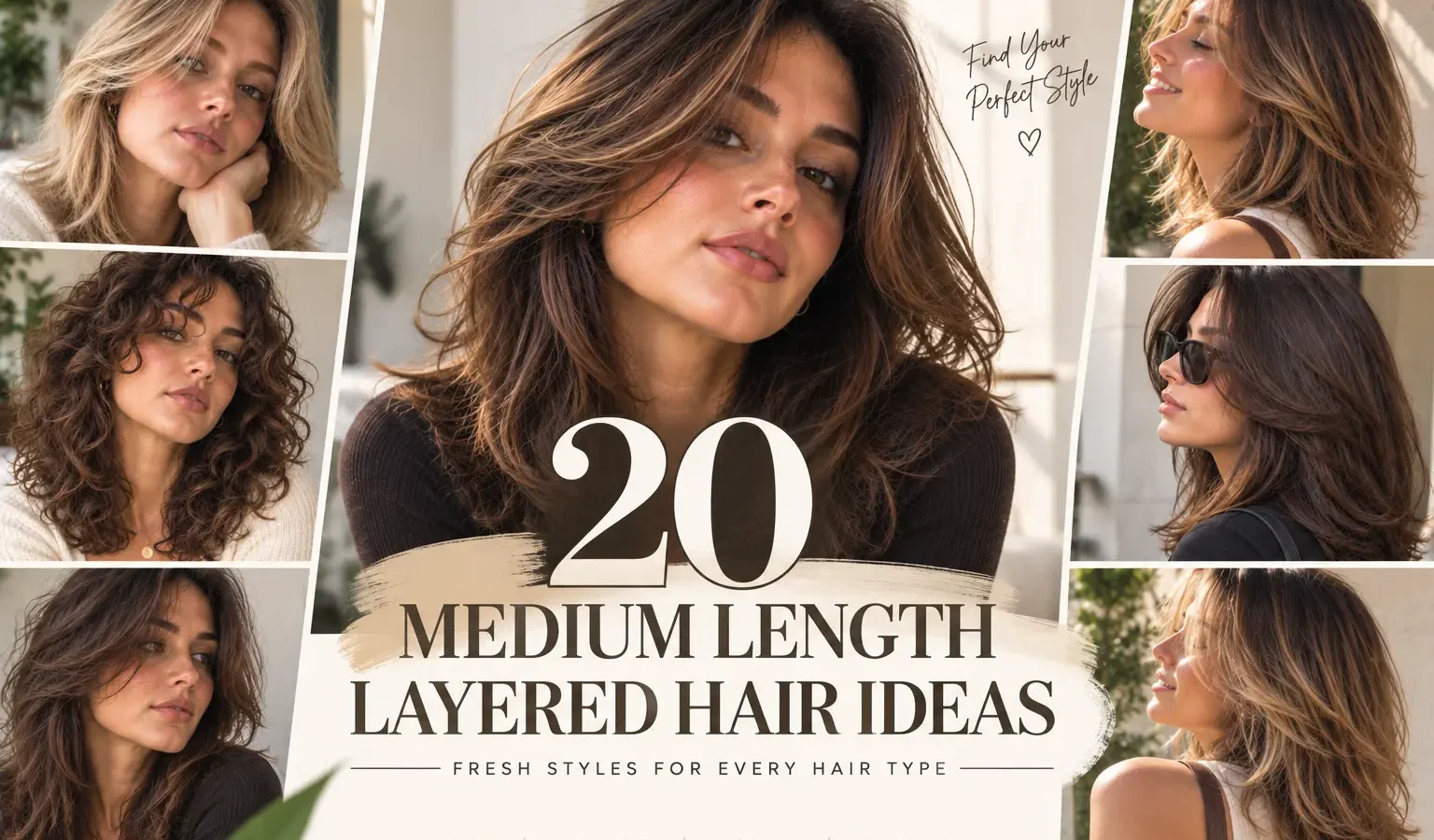
Medium-length layered hair is a great choice when you want more movement and shape without giving up too much length. Layers can remove excess weight, create volume, frame the face and make a shoulder-length cut feel completely different depending on how they’re placed.
From soft, barely noticeable layers to butterfly cuts, curtain bangs and textured shags, these 20 medium-length layered hair ideas offer plenty of inspiration for your next salon visit.
1. Classic Medium-Length Layers
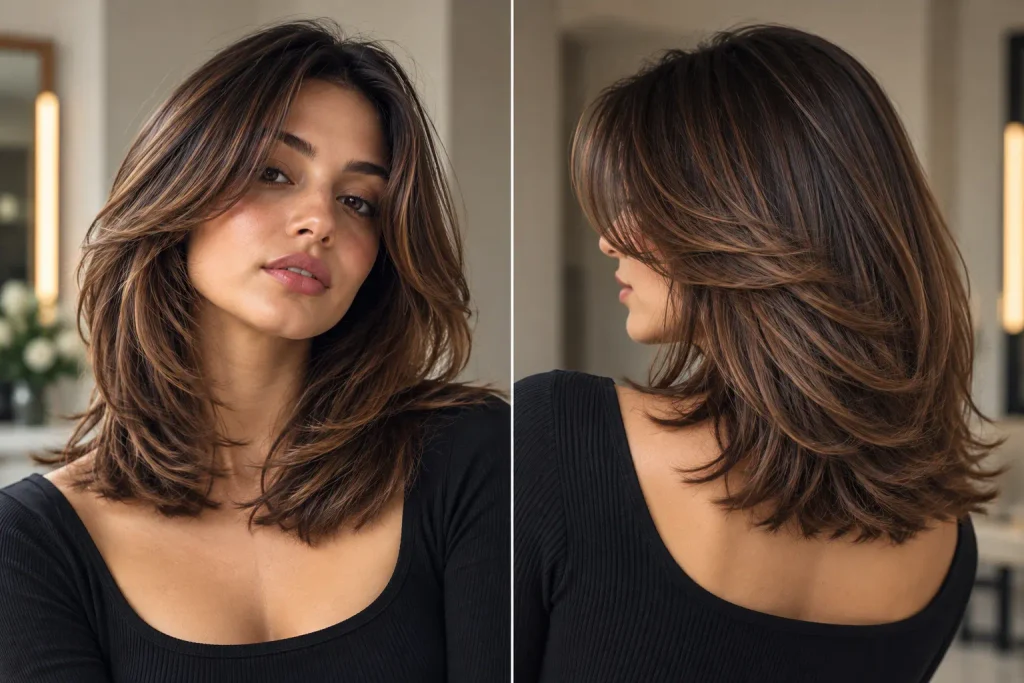
Classic layers add movement throughout medium-length hair while maintaining a balanced, timeless shape. The gradual change in length prevents the ends from feeling too heavy and works particularly well if you want noticeable layering without anything overly dramatic.
2. Soft Medium-Length Layers
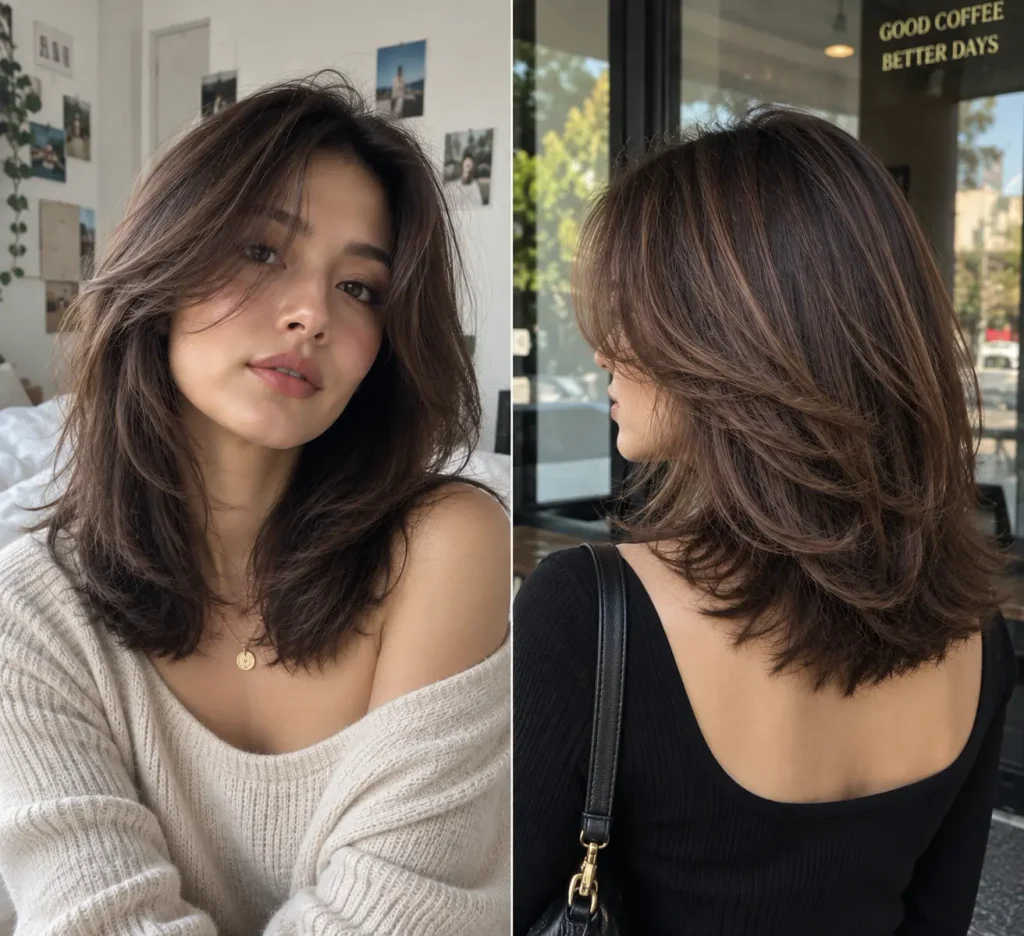
Soft layers blend gently into one another, creating subtle movement rather than clearly separated sections. This is a good option if you like the fullness of a mostly one-length cut but want the hair to fall more naturally around the shoulders.
3. Face-Framing Layers
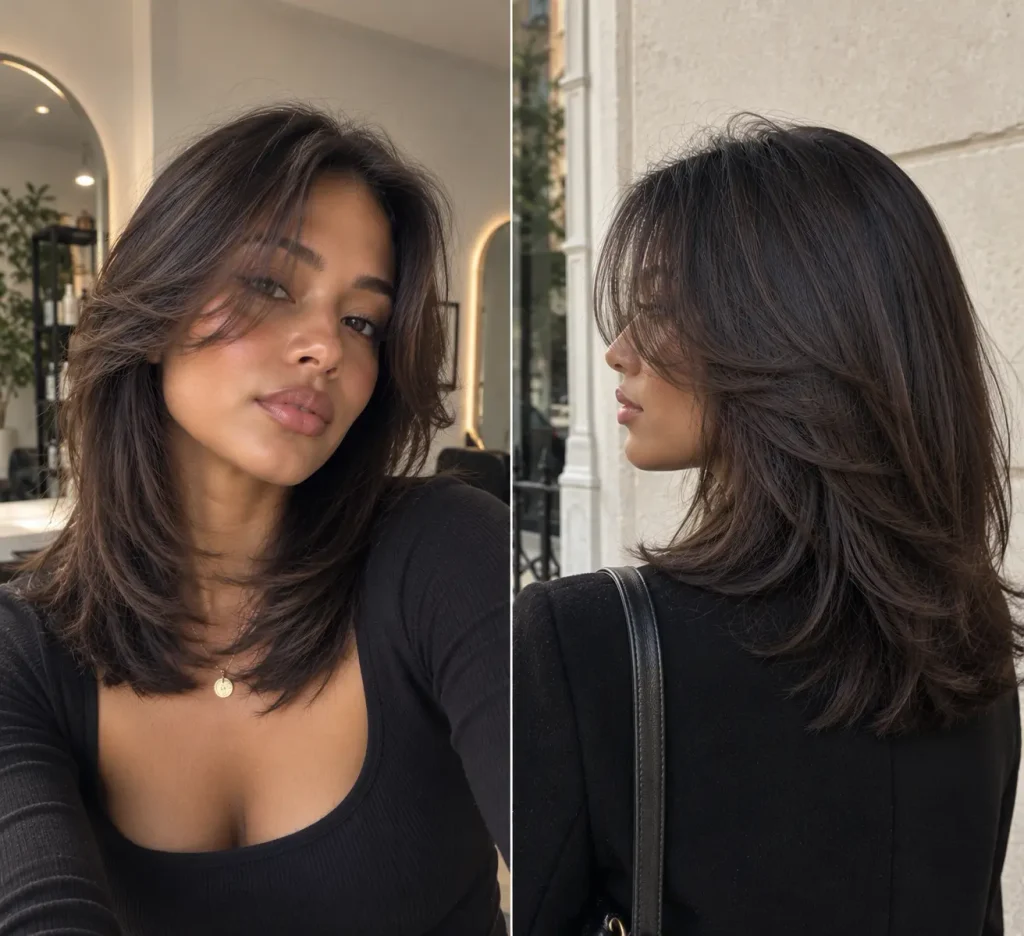
Face-framing layers concentrate the shorter pieces around the front of the hair. They can begin near the cheekbones or jawline before gradually blending into the longer lengths, bringing more attention to the face while keeping most of the hair intact.
4. Long Layers on Medium Hair
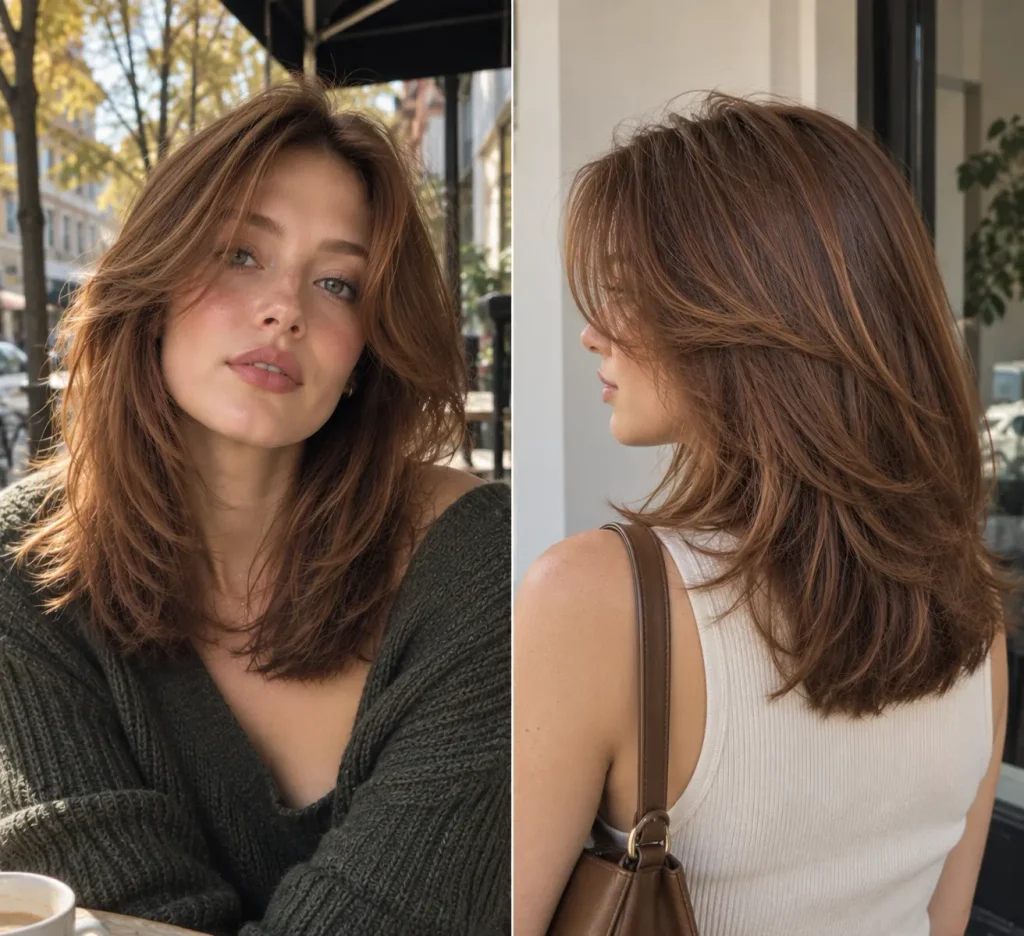
Long layers create movement without removing a large amount of length or density. Because the differences between each layer are relatively subtle, the finished haircut maintains a fuller appearance while gaining more shape through the mid-lengths and ends.
5. Butterfly Layers
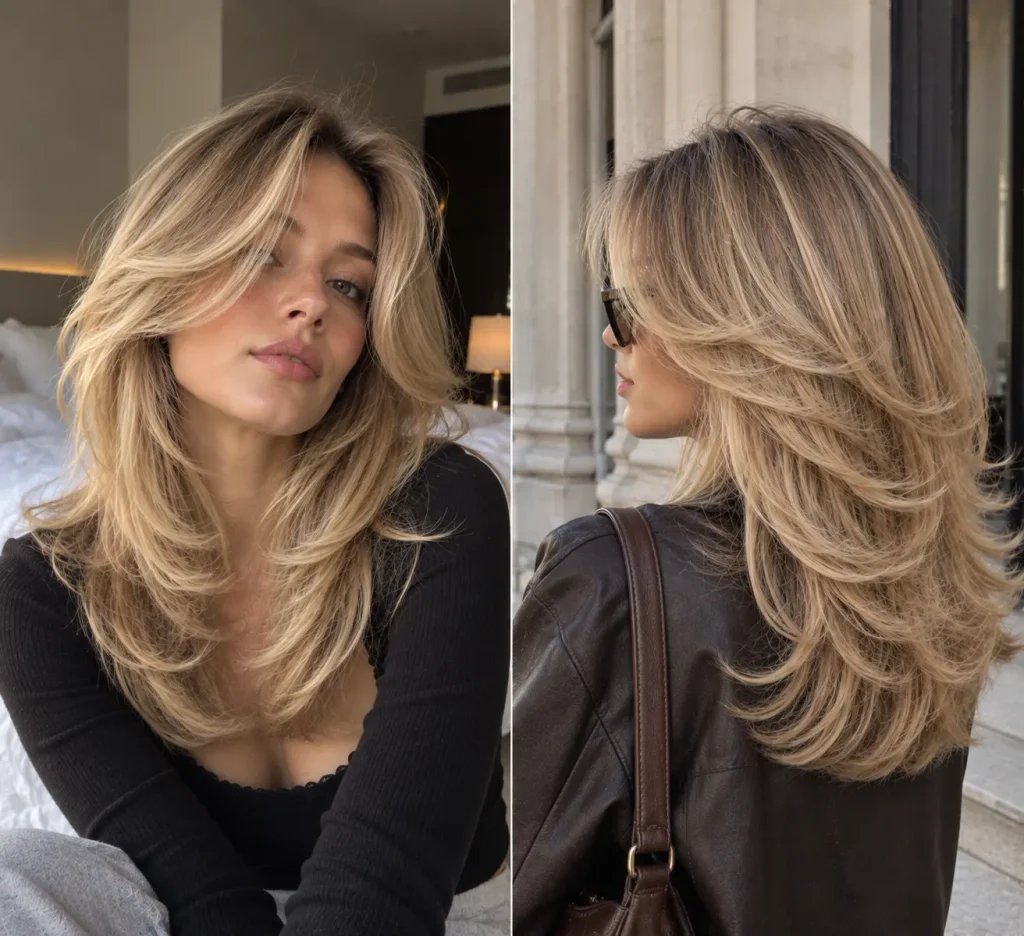
Butterfly layers combine shorter, bouncy pieces around the face with longer layers underneath. On medium-length hair, they create an airy, voluminous shape that’s especially noticeable when styled with a round brush or a soft blowout.
6. Feathered Medium-Length Layers
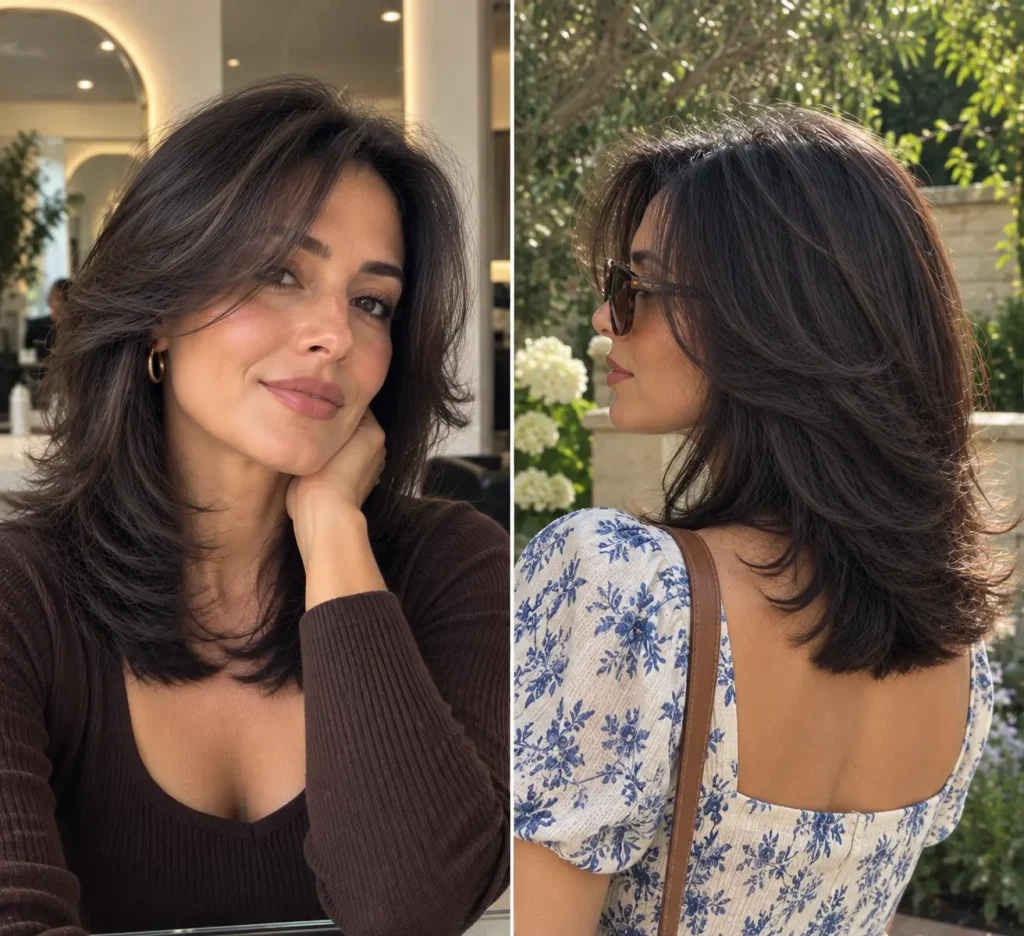
Feathered layers are tapered and styled away from the face to create a light, flowing finish. The technique works particularly well around the front sections, where the layers can sweep backward and give medium hair more movement.
7. Choppy Medium-Length Layers
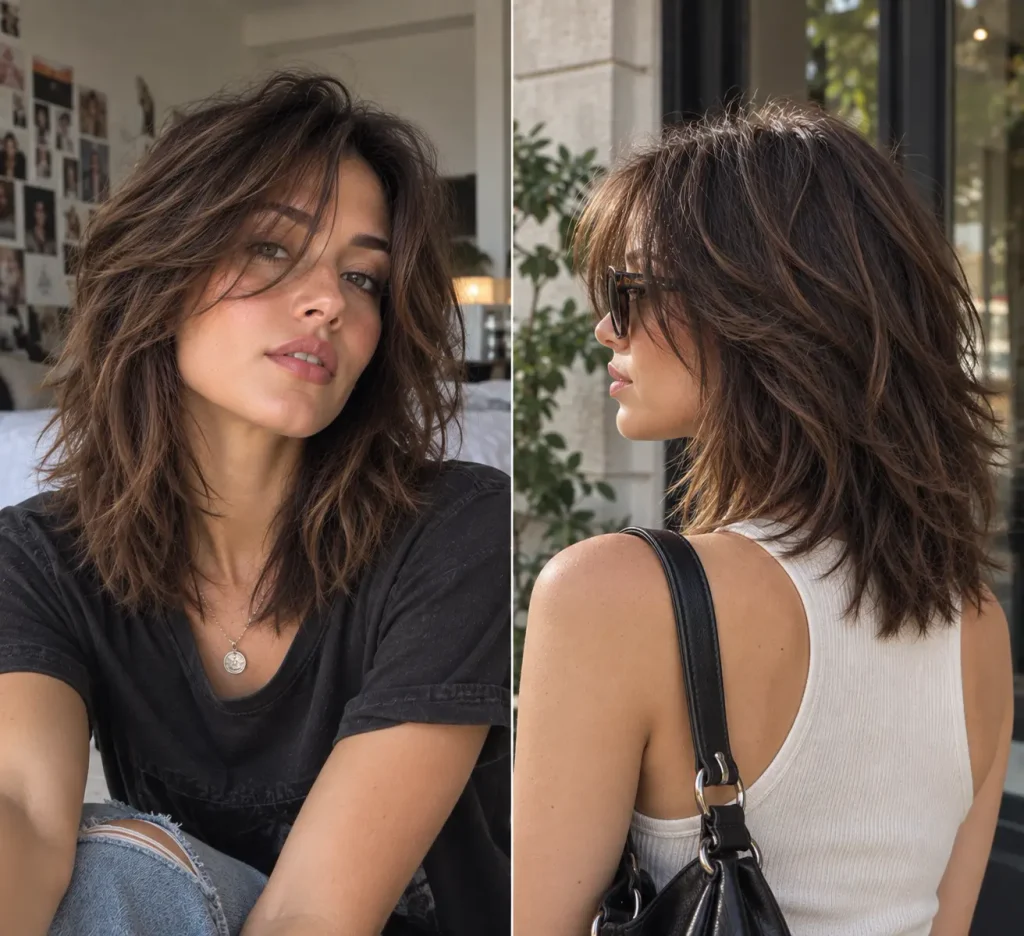
Choppy layers have a more defined and textured appearance than softly blended layers. The variation in length creates separation through the hair, making this a strong option if you prefer a slightly undone, modern finish rather than a perfectly polished cut.
8. Wispy Medium-Length Layers
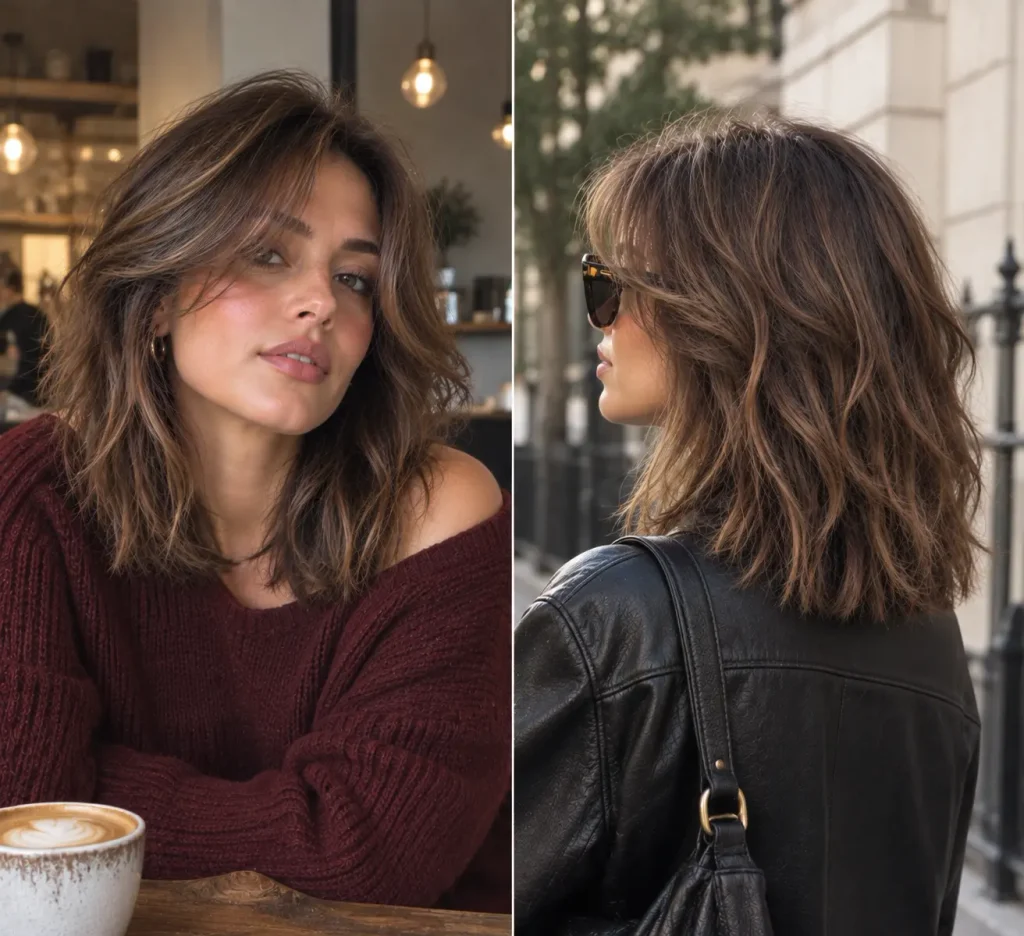
Wispy layers use lightweight, delicate pieces to soften the overall shape of the haircut. They’re especially effective around the ends and face, where subtle layering can create movement without dramatically changing the density of the hair.
9. Medium Layers With Curtain Bangs
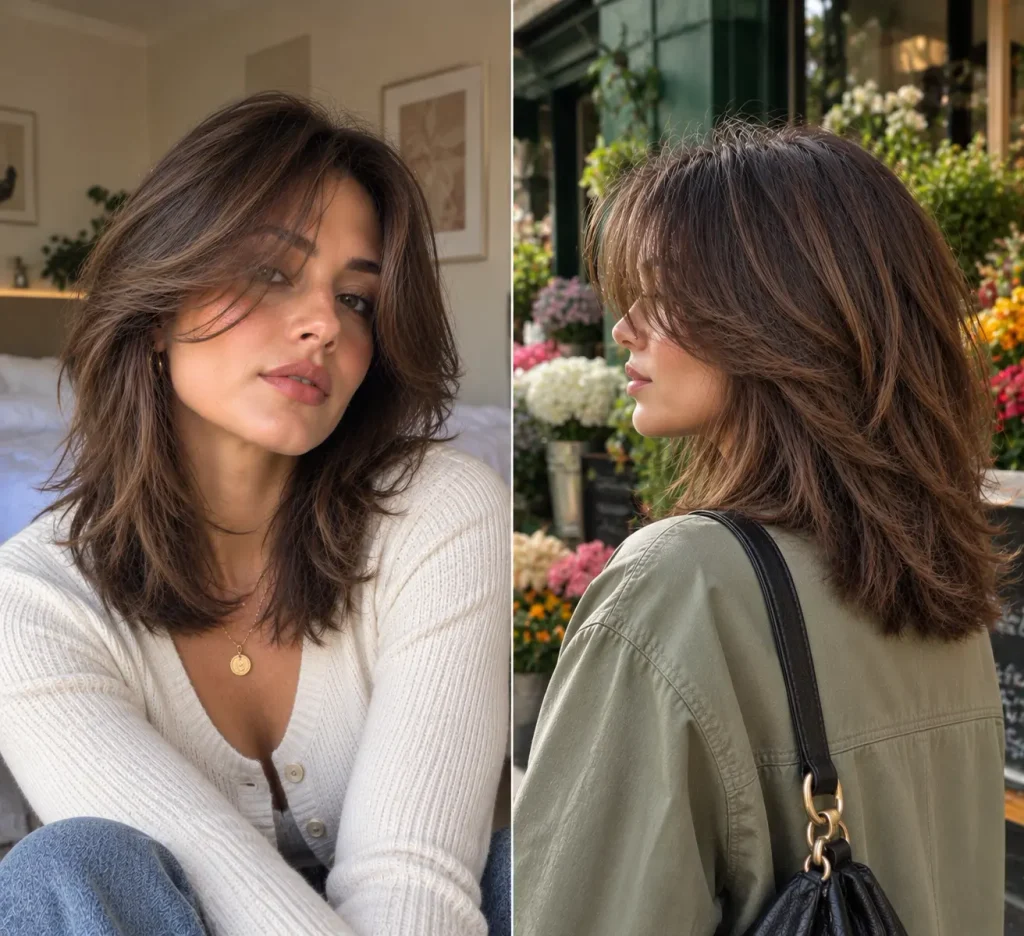
Curtain bangs blend naturally into a medium layered haircut because both rely on gradually changing lengths. The fringe opens through the centre and flows into the surrounding face-framing layers, creating a connected shape rather than a separate set of bangs.
10. Medium Layers With Wispy Bangs
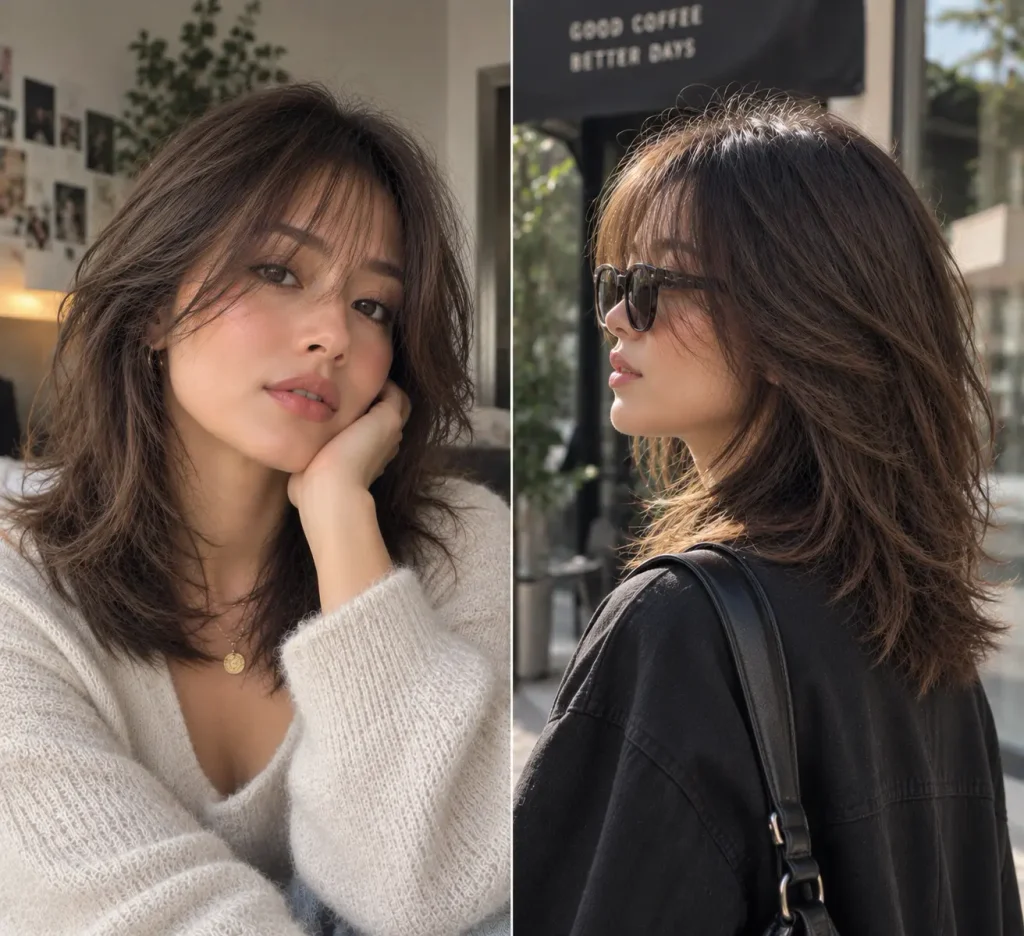
Wispy bangs add a lighter fringe to layered medium hair without creating a heavy line across the forehead. Pairing them with soft layers keeps the entire haircut airy and gives the front sections plenty of natural movement.
11. ’90s Bouncy Layers
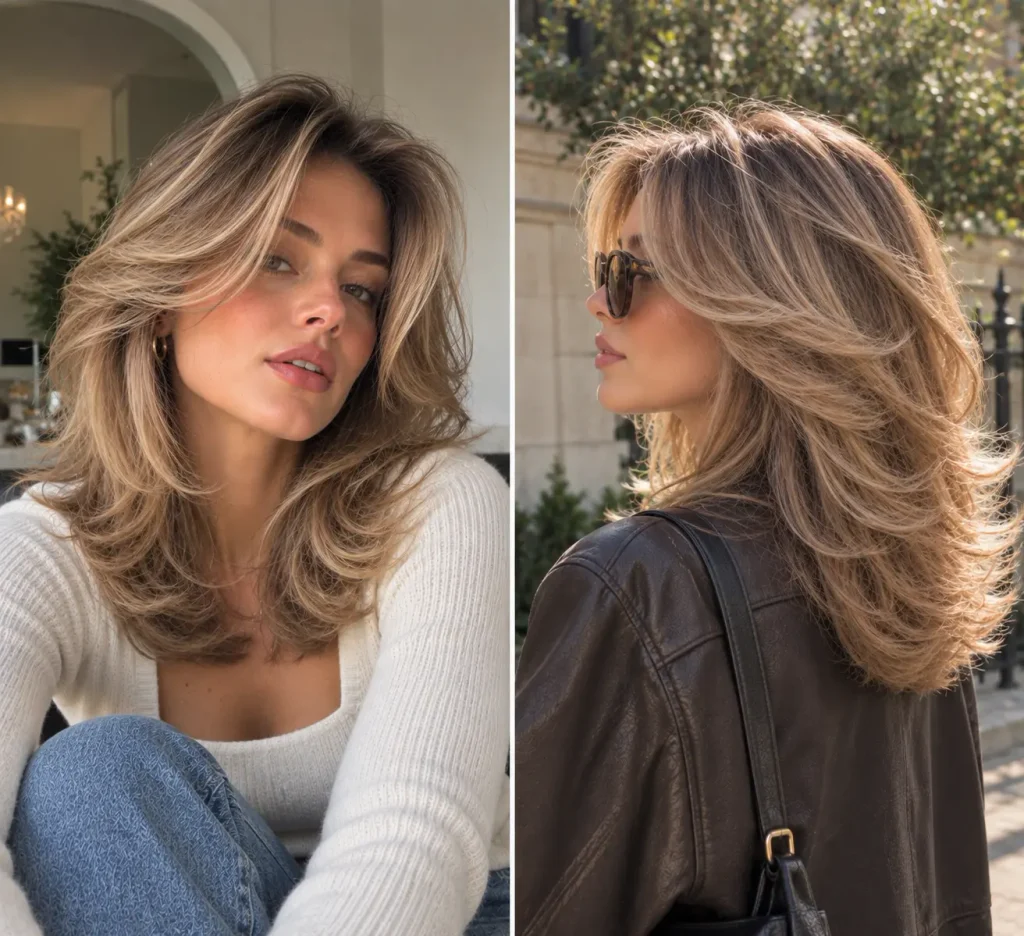
Inspired by voluminous ’90s blowouts, this style uses pronounced layers to create lift and movement around the face. Styling the ends inward and outward at different levels helps emphasize the layered shape and creates the signature bouncy finish.
12. Medium-Length Shag With Layers
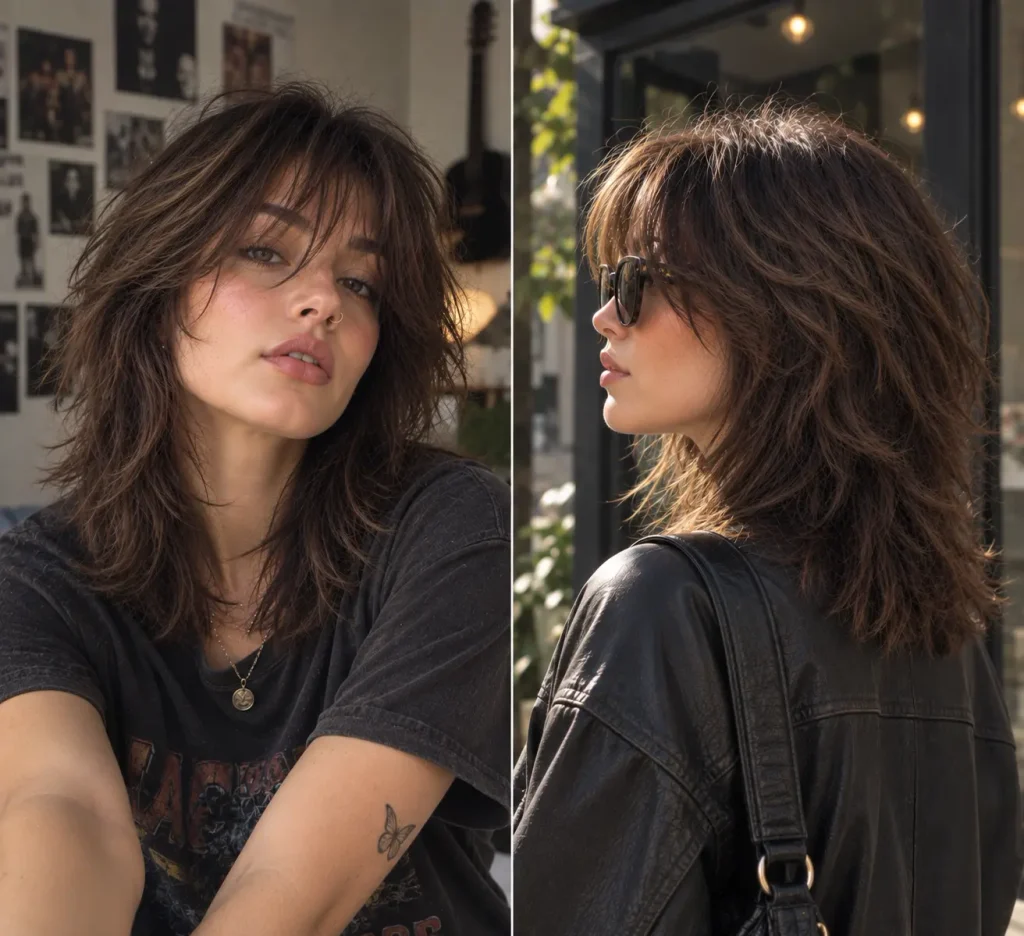
A medium shag uses shorter layers around the crown and increasingly longer pieces toward the ends. The result is intentionally textured and slightly undone, making it particularly suited to anyone who prefers movement and character over a sleek, uniform shape.
13. Layered Shoulder-Length Lob
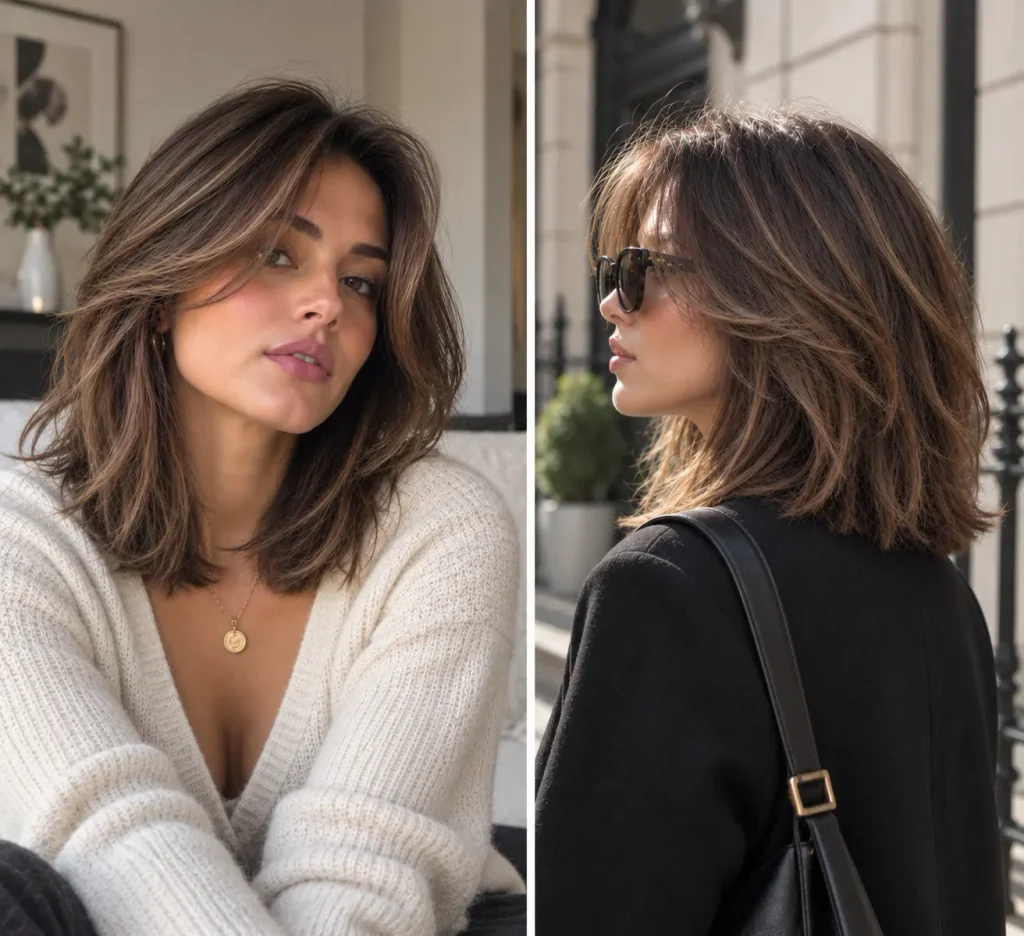
Adding layers to a shoulder-length lob gives the classic shape more movement. Instead of maintaining one blunt baseline, subtle layering breaks up some of the weight and can make the cut feel softer around the face and shoulders.
14. U-Shaped Medium Layered Hair
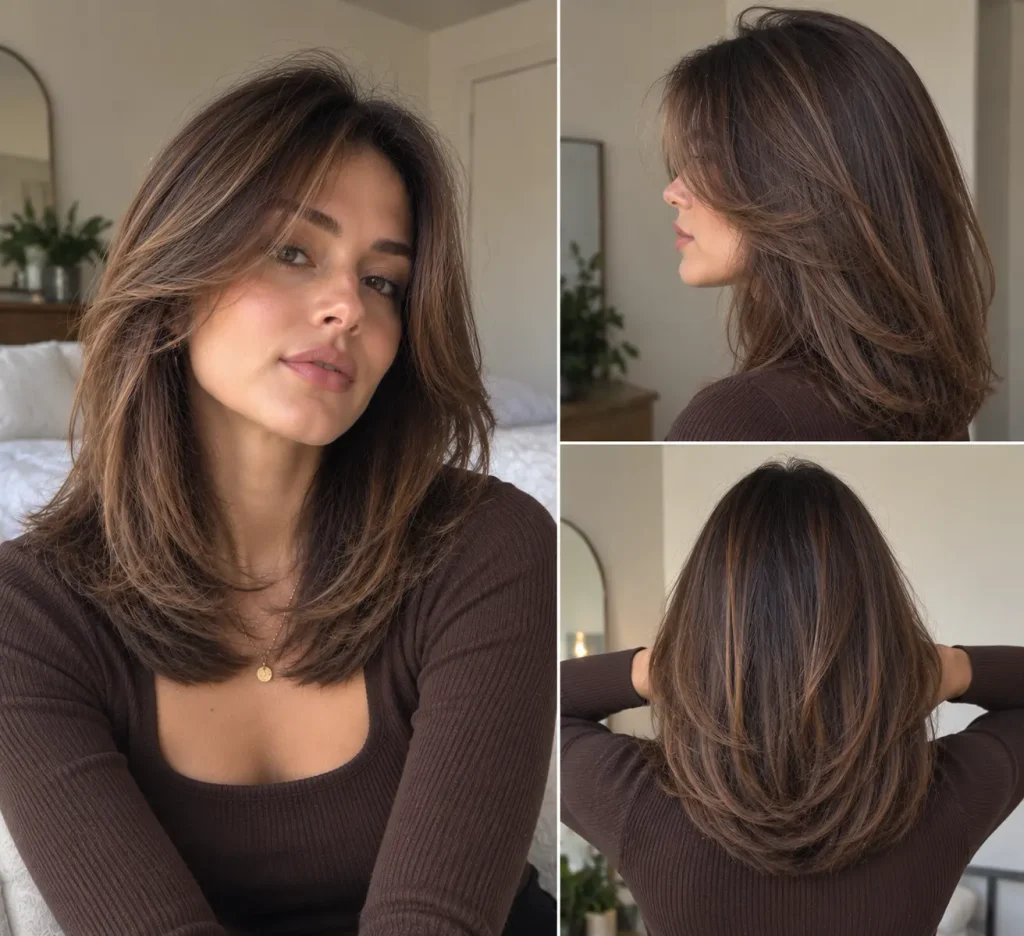
A U-shaped cut creates a softly rounded outline when viewed from behind, with the centre remaining slightly longer than the sides. Adding layers within that shape creates movement while preserving a substantial amount of length and fullness at the bottom.
15. Medium Layered Wavy Hair
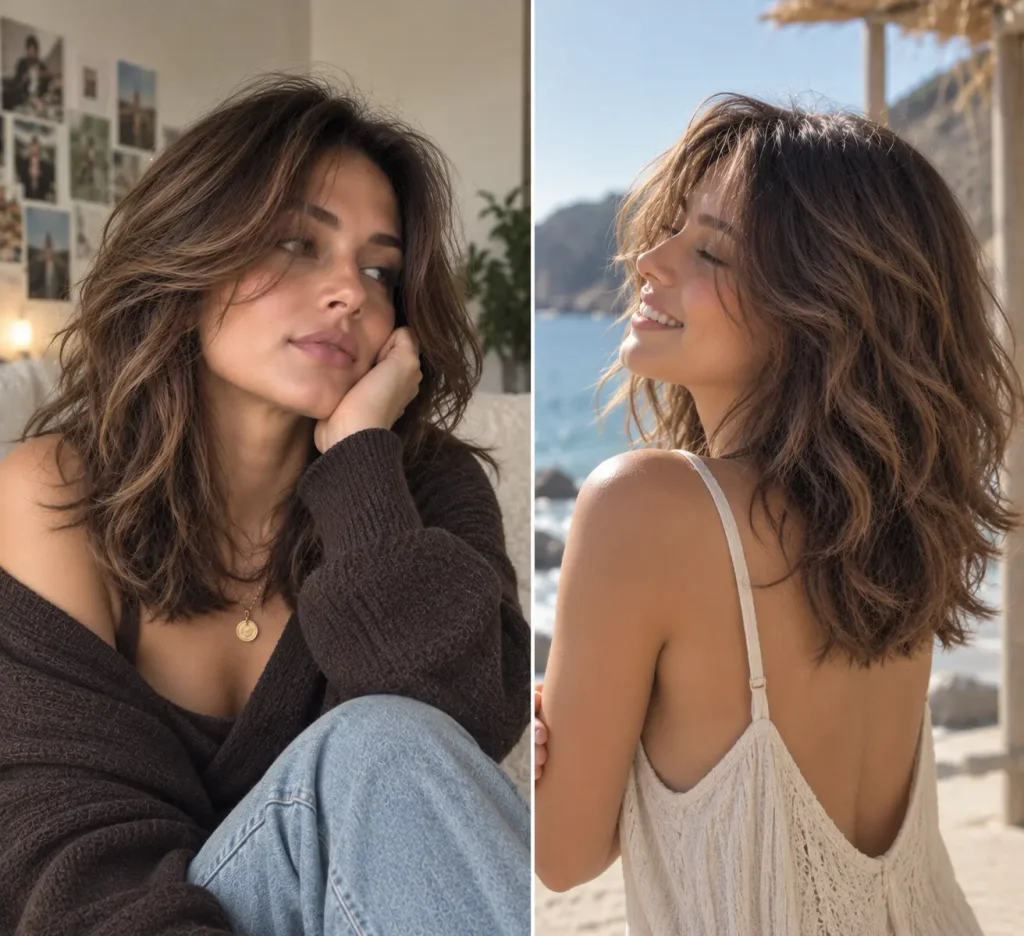
Layers can help natural waves sit at different levels instead of forming one heavy shape. Medium length provides enough room for the wave pattern to develop, while carefully placed layers can encourage movement through the sides and ends.
16. Medium Layered Curly Hair
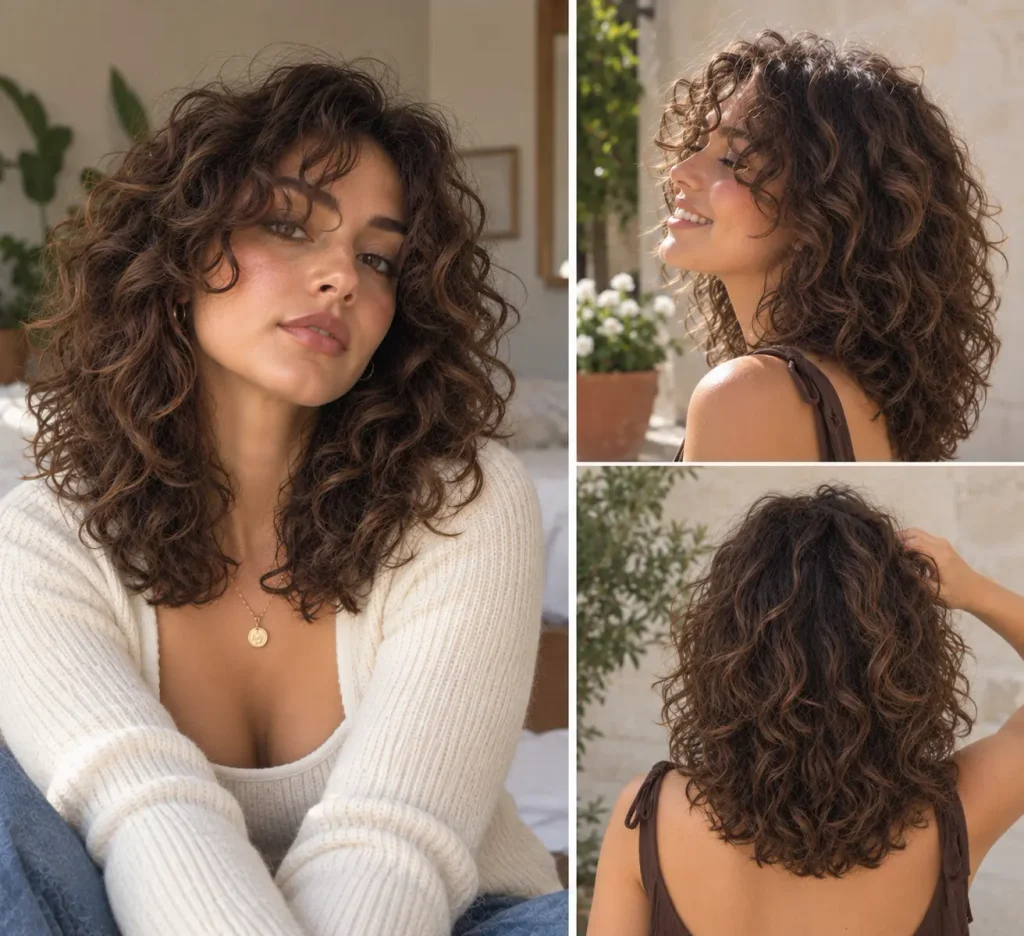
Layering curly medium-length hair can help distribute volume throughout the haircut. Rather than allowing most of the weight to collect toward the bottom, layers create shape at different heights while giving individual curls more room to form.
17. Medium Layers for Fine Hair
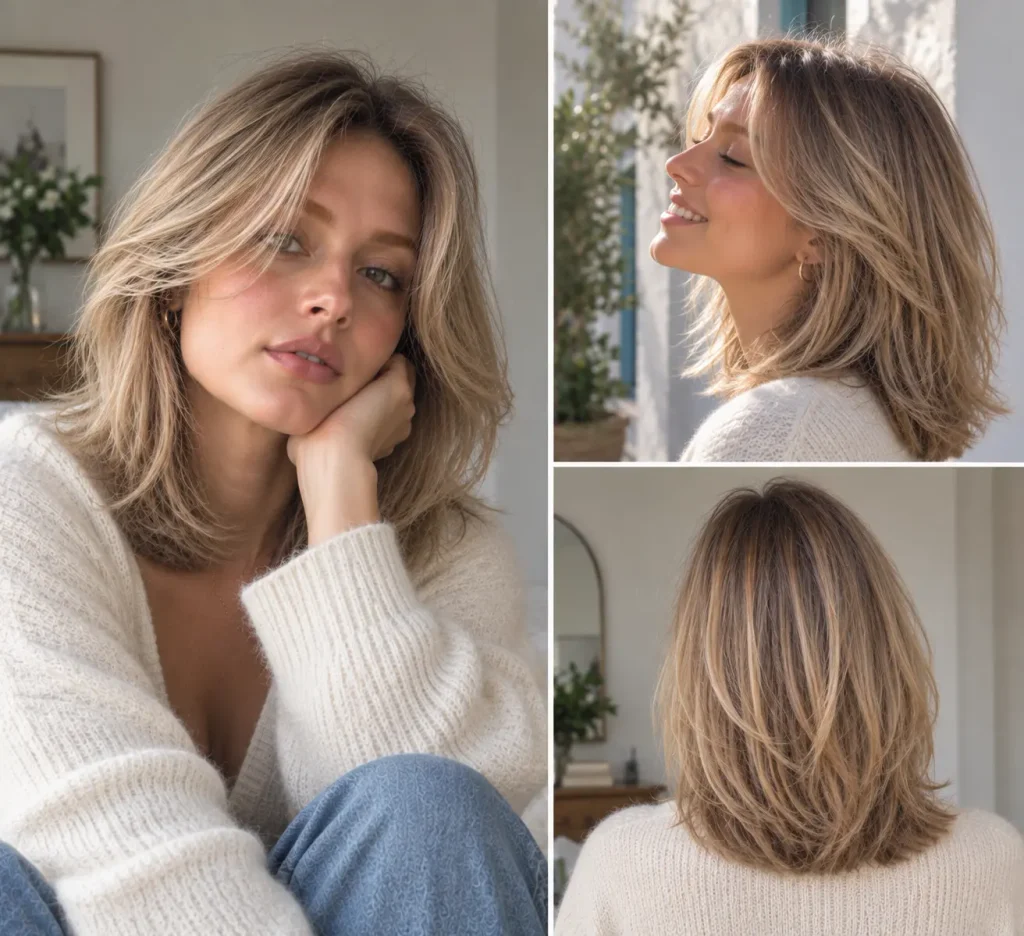
Fine hair usually benefits from thoughtful rather than excessive layering. Keeping a relatively full perimeter while introducing a few longer or face-framing layers can provide movement without unnecessarily removing density from the ends.
18. Medium Layers for Thick Hair
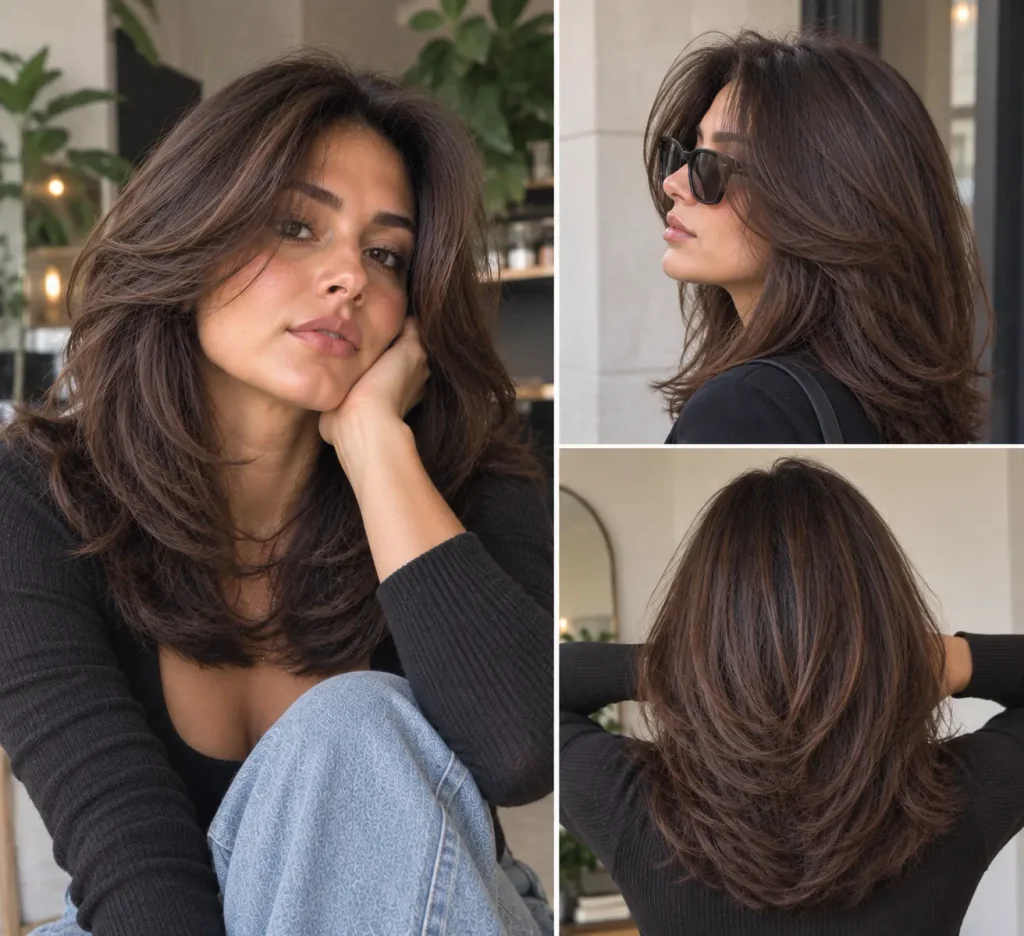
Thick hair can carry more layering without immediately losing its sense of fullness. Longer layers can remove some excess weight, reduce a bulky silhouette and allow the hair to move more freely while still showcasing its natural density.
19. Low-Maintenance Medium Layers
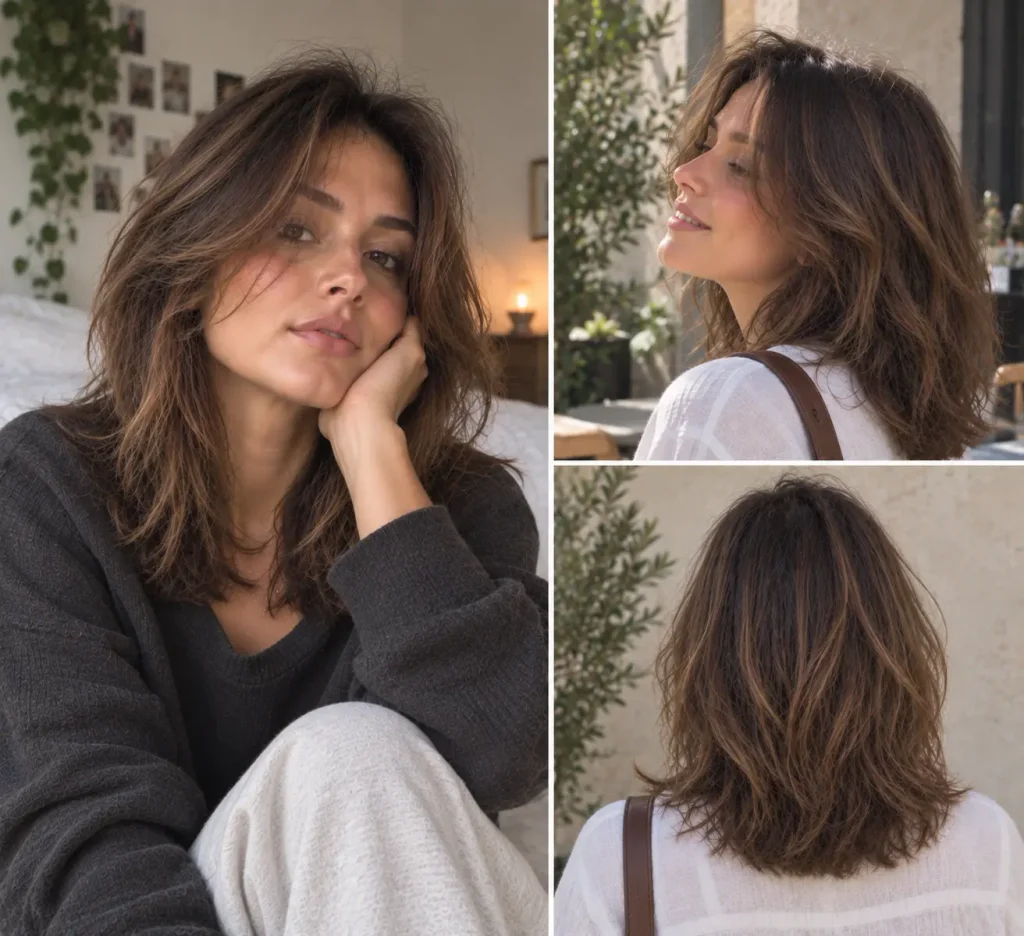
Low-maintenance layers are designed to grow out softly and work with the hair’s natural texture. Longer, blended layers generally require less daily styling than highly structured or very short layers, making them practical if you don’t want to recreate a salon blowout every morning.
20. Medium Layers With Balayage
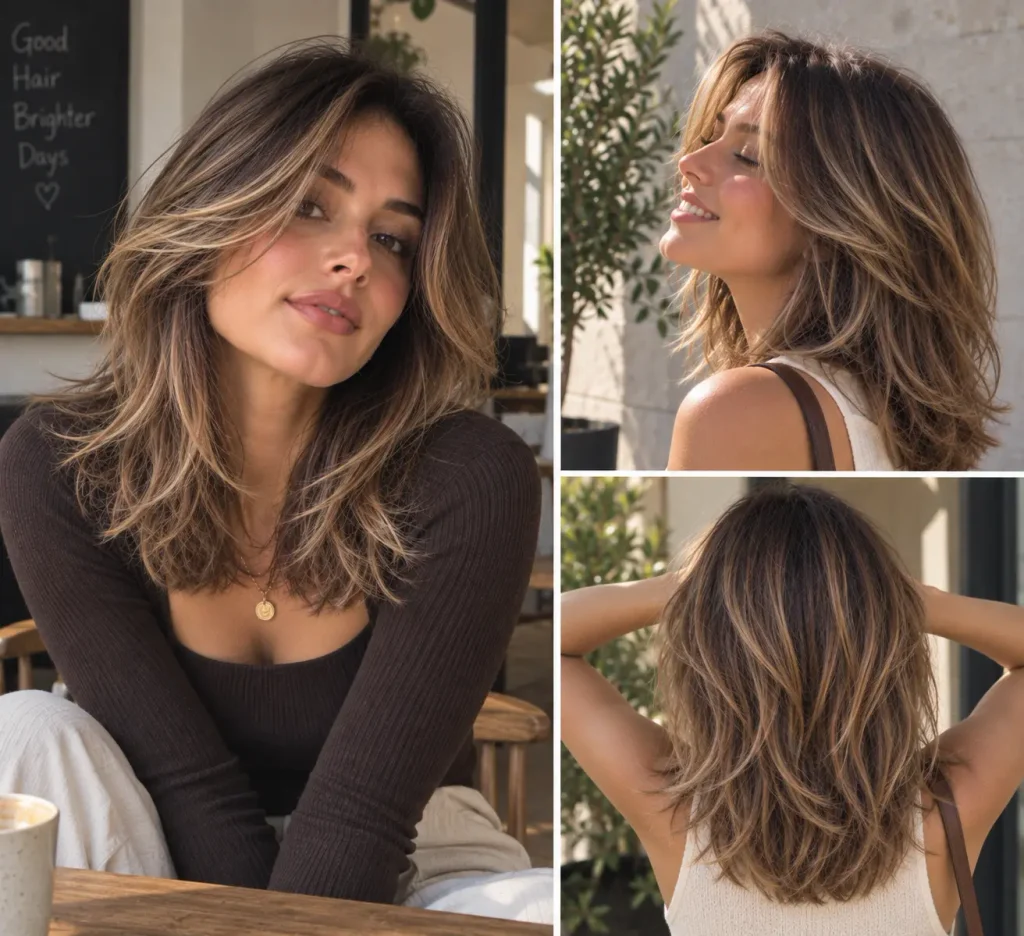
Balayage can make the different levels of a layered haircut more noticeable by placing lighter tones through selected sections. When the hair moves or is styled into waves, the combination of varying lengths and colour creates additional visual depth.
How to Choose the Right Layers for Medium-Length Hair
The best type of layering depends largely on your hair texture, density and how much styling you’re willing to do.
If your hair is fine or thin, removing too much hair through aggressive layering can make the ends appear less dense. Longer layers, subtle face-framing pieces or a fuller perimeter may be more suitable.
Thicker hair can usually support more pronounced layering. Removing weight through longer layers can help prevent medium-length hair from becoming overly bulky around the shoulders.
For naturally wavy or curly hair, layer placement should take the natural pattern into account. Hair can sit differently when dry, so showing your stylist reference photos with a texture similar to your own is particularly useful.
What to Ask for at the Salon
Save a few reference photos rather than relying only on the name of a haircut. Terms such as butterfly layers, feathered layers or face-framing layers can be interpreted differently depending on the stylist and your starting hair.
Point out exactly what you like about the reference the shortest layer, the shape around the face, the amount of volume or how full the ends remain.
Also tell your stylist how you normally wear your hair. A layered haircut that looks great after a professional round-brush blowout may behave quite differently when air-dried.
Frequently Asked Questions
Layers can add movement, change the distribution of volume and give medium-length hair more shape. How much layering works best depends on your natural texture and density.
Certain types of layering can create the appearance of additional movement and volume, but excessive layering can make fine ends appear thinner. For finer hair, preserving density around the perimeter is often important.
Long, subtle layers and carefully placed face-framing pieces can introduce movement while retaining more fullness through the ends. The ideal amount will depend on how fine and dense your individual hair is.
Long layers, internal layering and more pronounced face-framing pieces can help remove excess weight from thick hair. Your stylist can determine how much hair can be removed without compromising the desired shape.
Not necessarily. Longer, blended layers can grow out relatively softly. More structured cuts, short face-framing pieces and bangs generally require more styling or more frequent reshaping.
Regular layers can be distributed throughout the entire haircut, while face-framing layers specifically concentrate shorter pieces around the front. A haircut can include either one or both.
If you’re still deciding what kind of cut you want, explore our 20+ Best Medium-Length Hairstyles & Haircuts for Women for more ideas including lobs, bangs, waves, curls and low-maintenance styles.