Medium-length hair gives you the best of both worlds: enough length to experiment with layers, waves and different finishes, without the upkeep that often comes with very long hair. Sitting somewhere between the chin and shoulders, these cuts can work with straight, wavy, curly, fine and thick hair.
From soft face-framing layers and textured lobs to curtain bangs, shags and low-maintenance cuts, here are 20 medium-length hairstyles and haircuts for women to inspire your next salon visit.
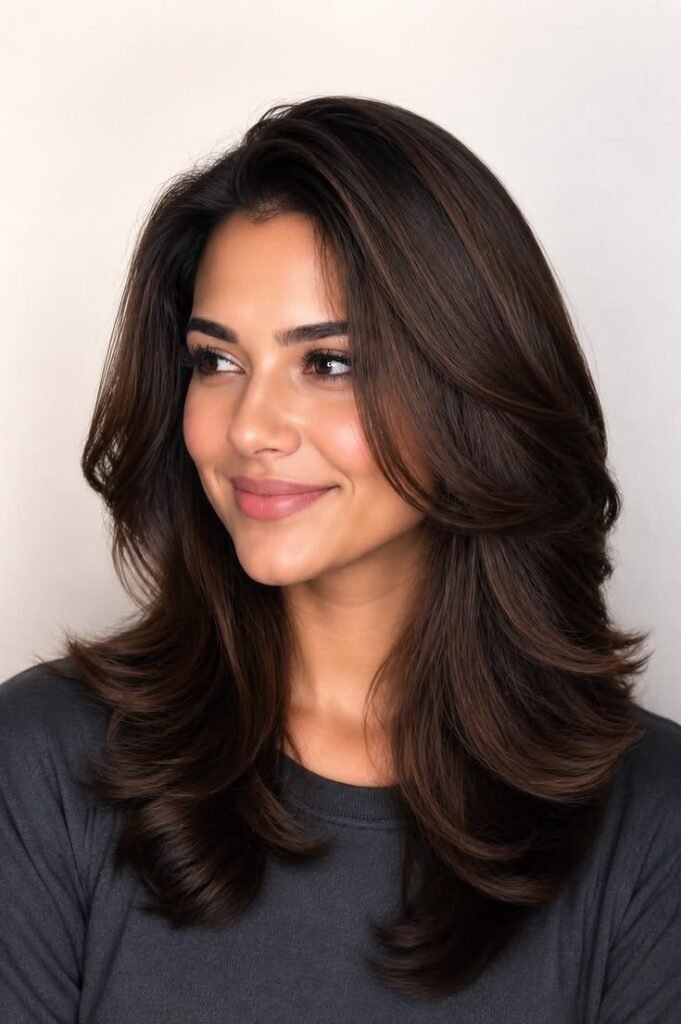
1. Medium-Length Hair With Soft Layers
Soft layers give medium-length hair movement without taking away too much fullness from the ends. The subtle changes in length help the hair fall naturally and keep the overall shape light and effortless. It’s a versatile option if you want noticeable shape without committing to heavily layered hair.
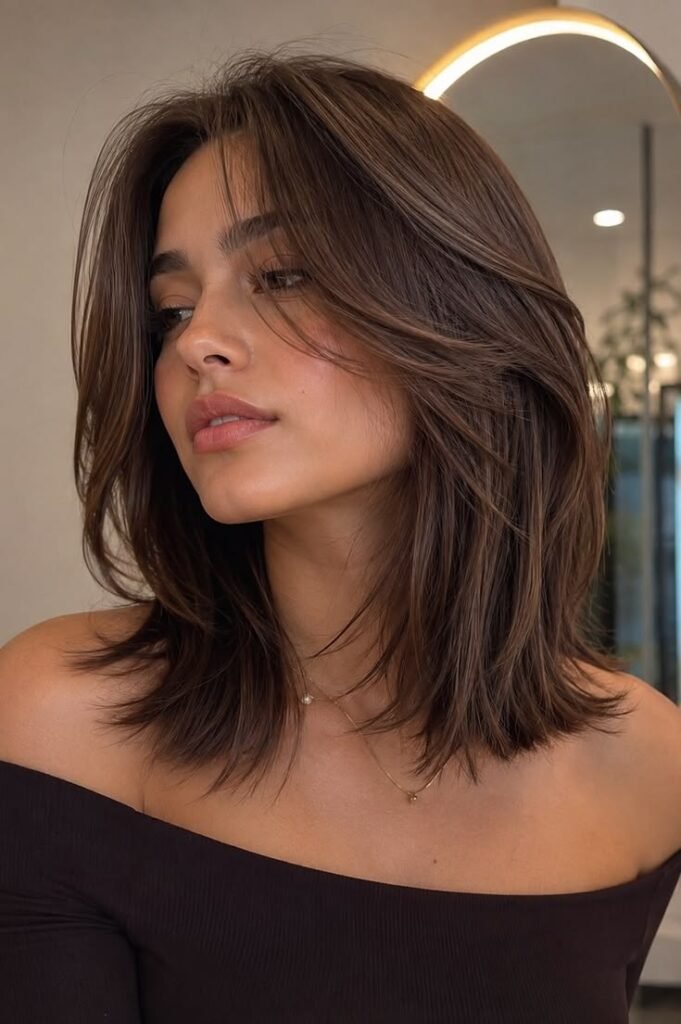
2. Face-Framing Medium-Length Layers
Face-framing layers are cut shorter around the front before gradually blending into the rest of the hair. They can highlight the cheekbones and jawline while giving a shoulder-length cut more shape. They also look particularly good when styled with a soft blowout or loose waves.
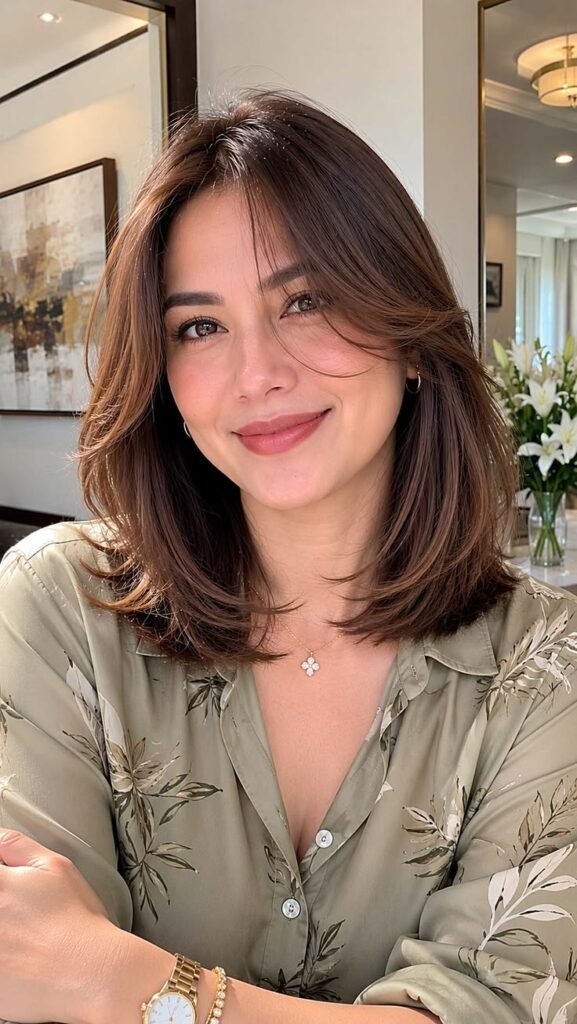
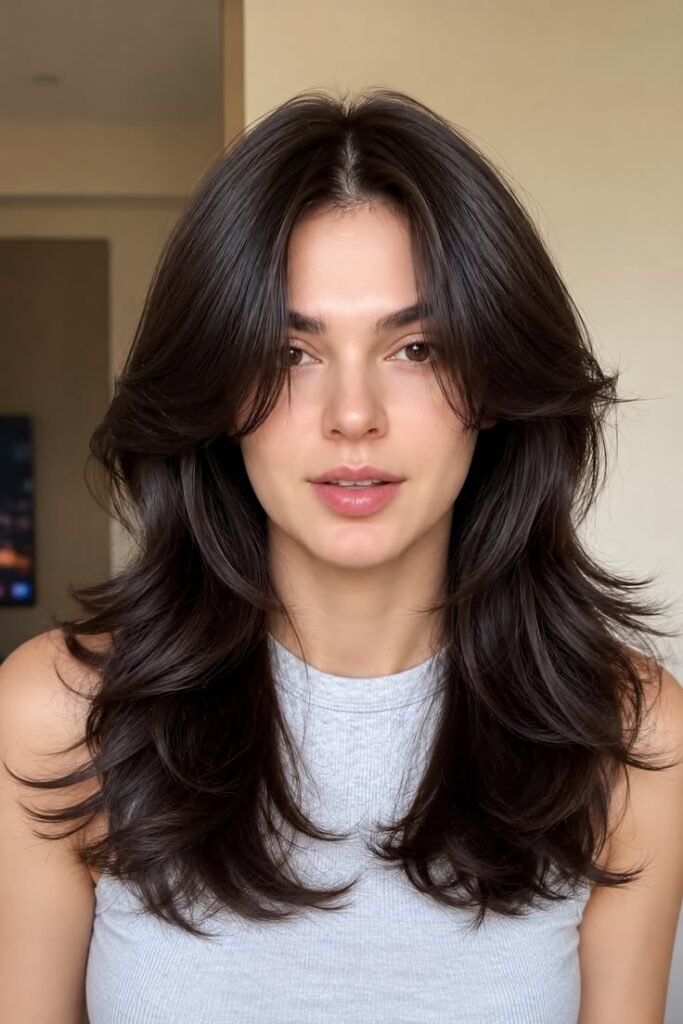
3. Medium-Length Butterfly Layers
Butterfly layers combine shorter, airy pieces around the face with longer layers through the rest of the hair. On medium-length hair, the result is a bouncy, dimensional cut that works especially well with a round-brush blowout.
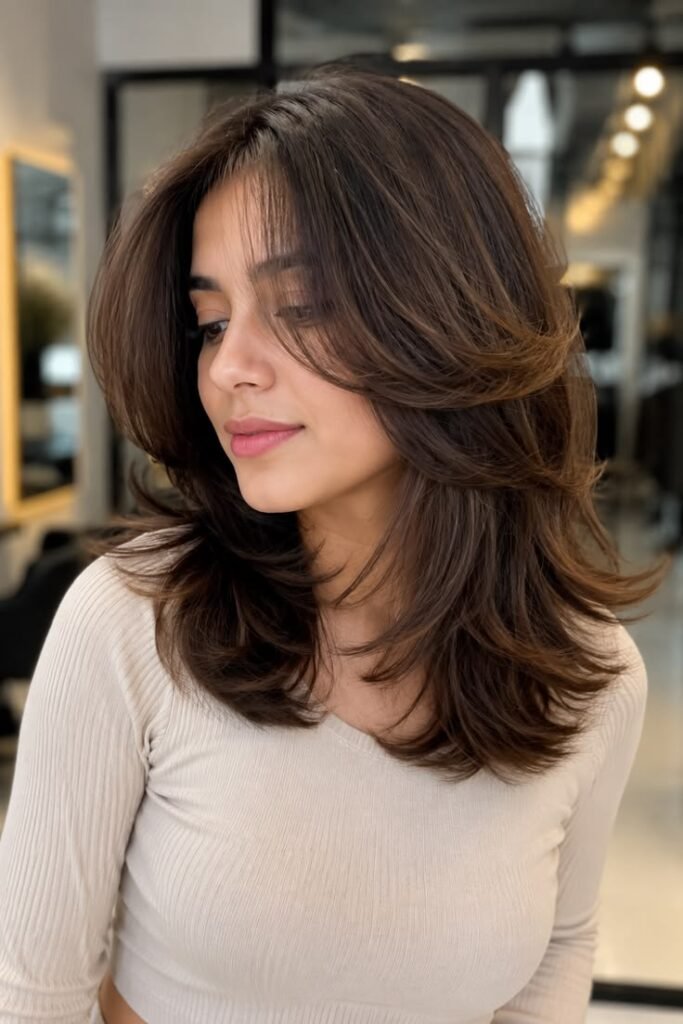
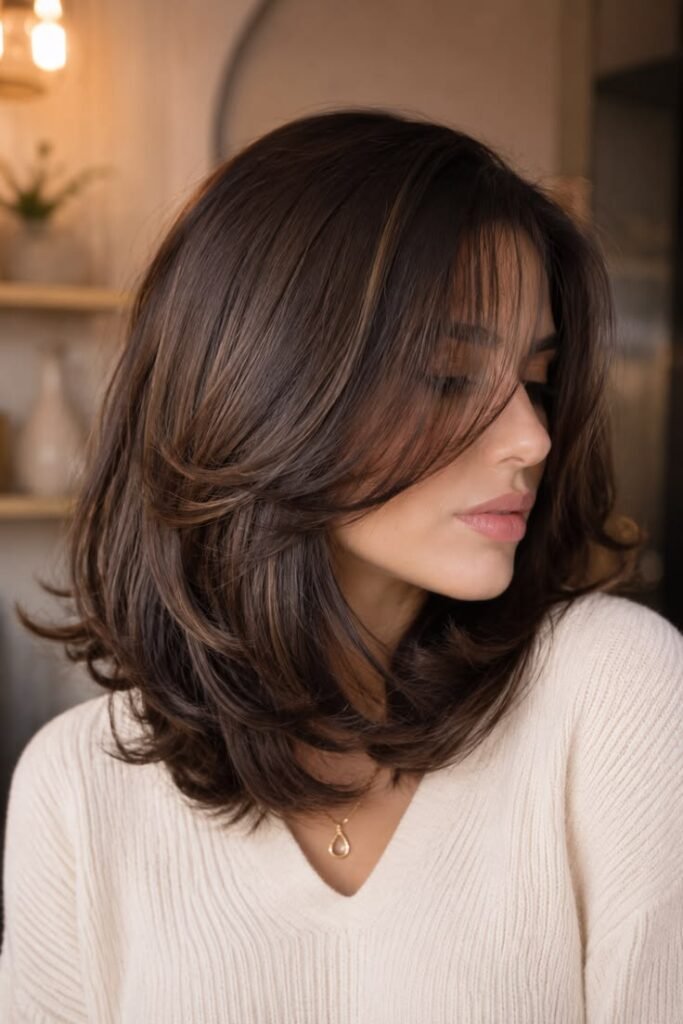
4. Choppy Medium-Length Layers
Choppy layers create a more textured, deliberately undone finish. Instead of blending seamlessly, the different lengths remain slightly more visible, adding movement and character. This works particularly well for naturally wavy hair or anyone who prefers a less polished style.
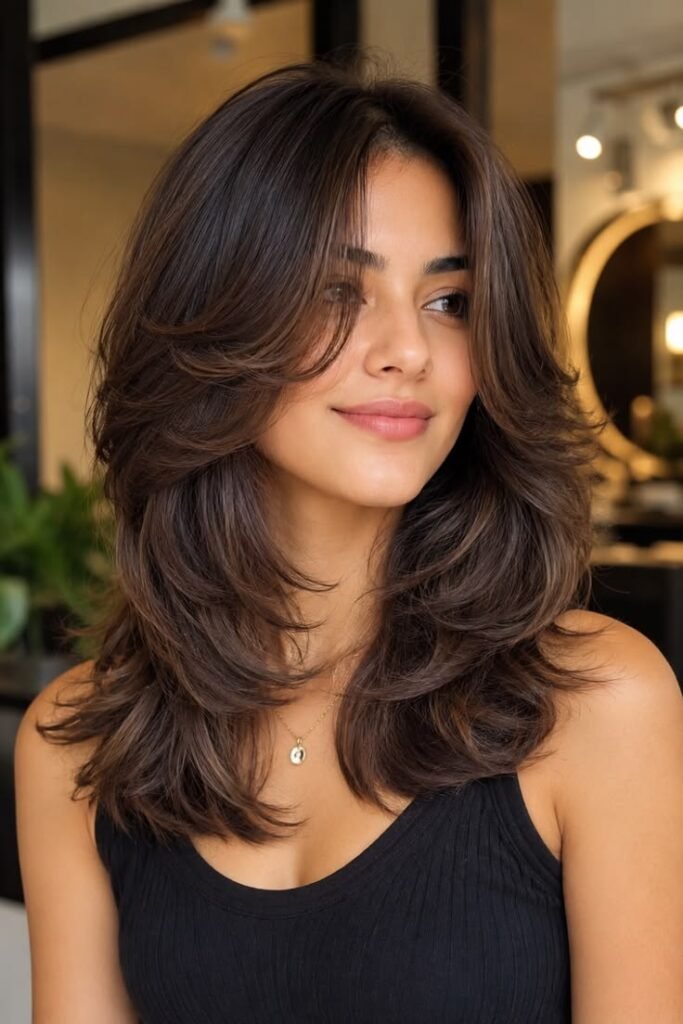
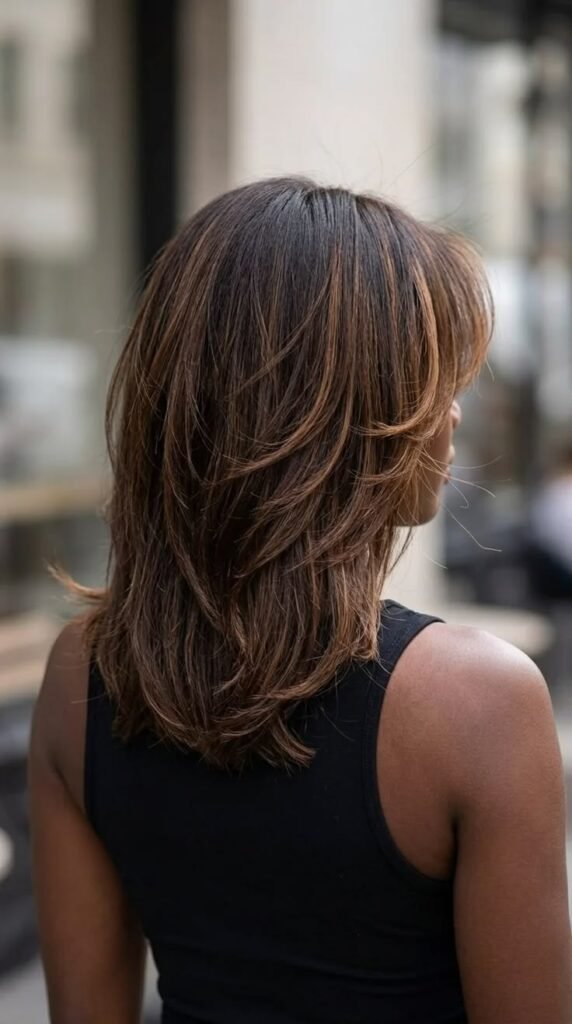
5. Feathered Medium-Length Layers
Feathered layers are light and tapered, creating soft movement around the face and through the ends. Styling the layers away from the face gives the cut its characteristic airy appearance and can make medium-length hair look fuller without feeling heavy.
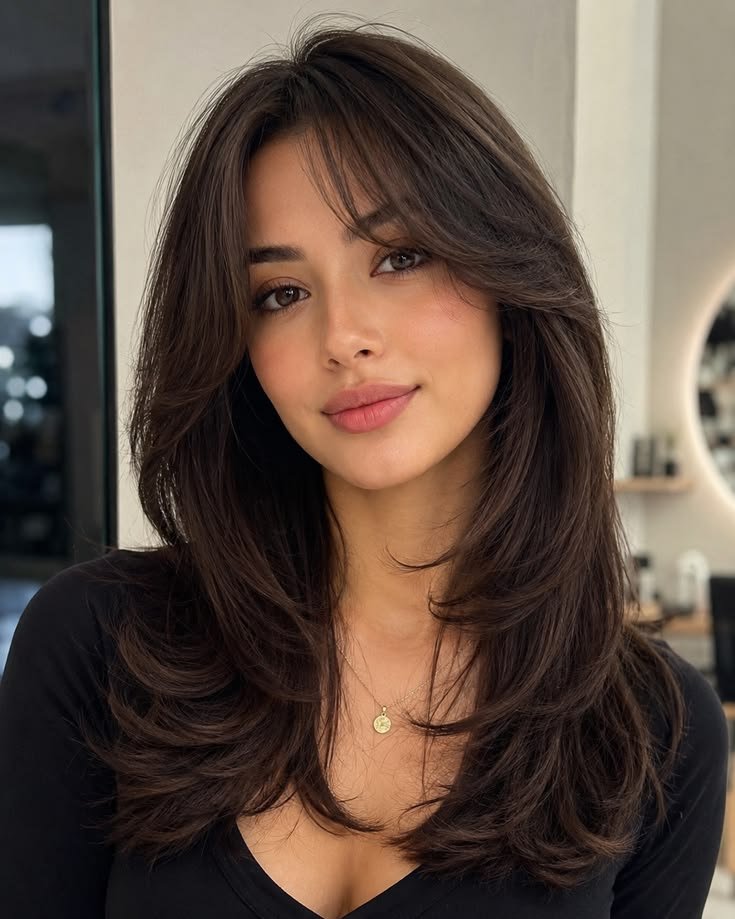
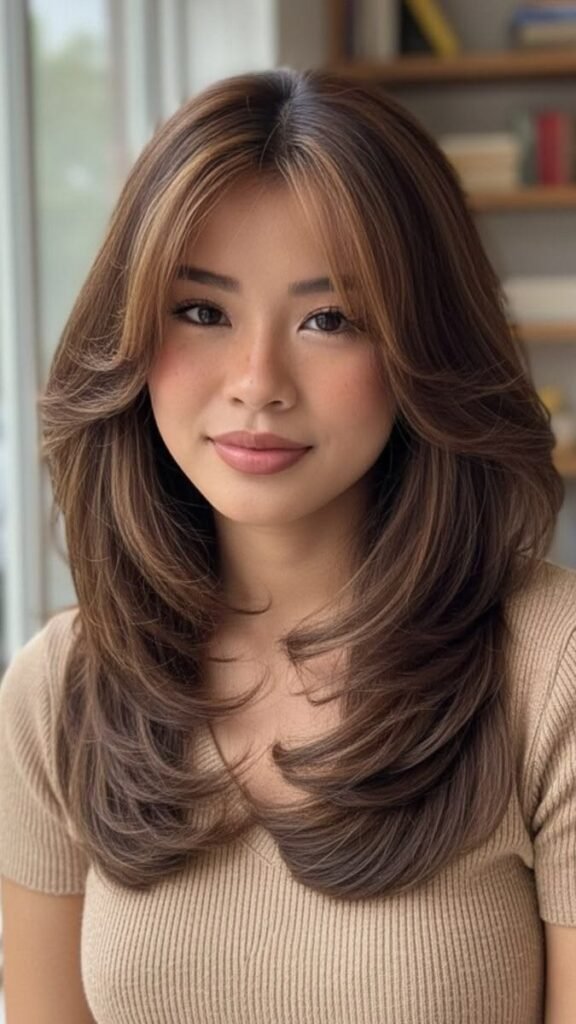
6. Medium-Length Hair With Curtain Bangs
Curtain bangs split softly through the centre and blend into the surrounding layers. They add shape around the eyes and cheekbones without the commitment of a heavy full fringe. As they grow out, they can transition naturally into face-framing pieces.
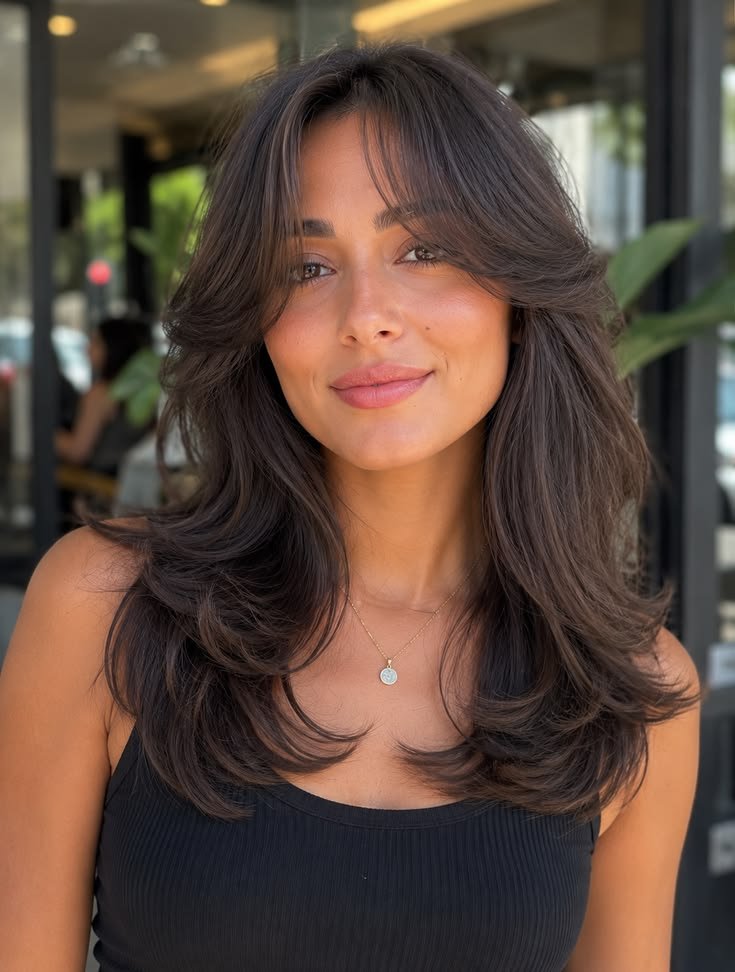
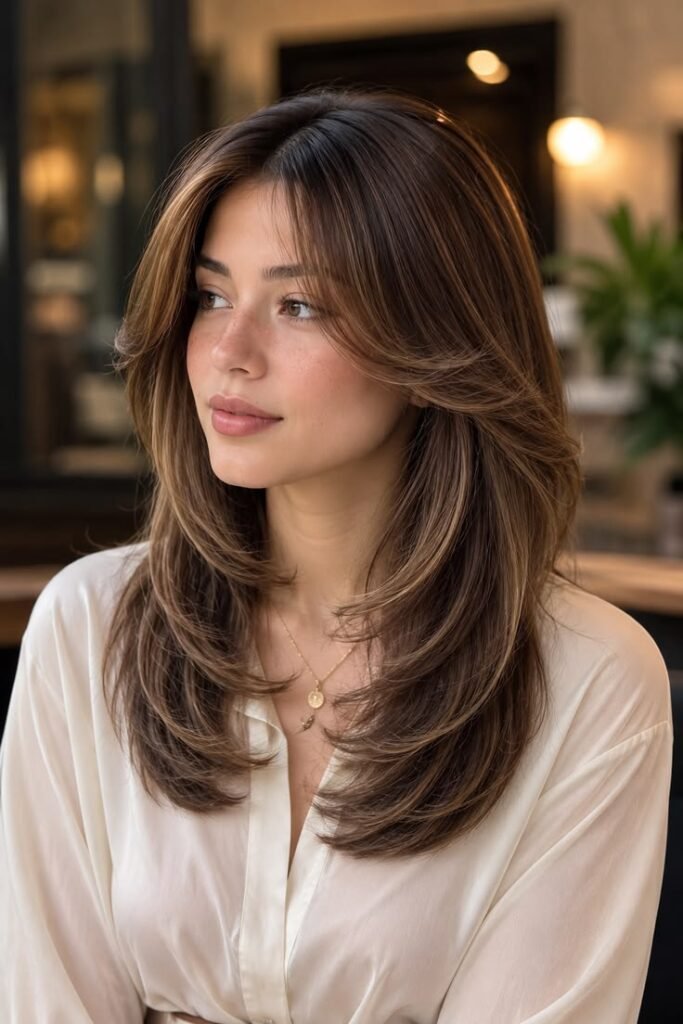
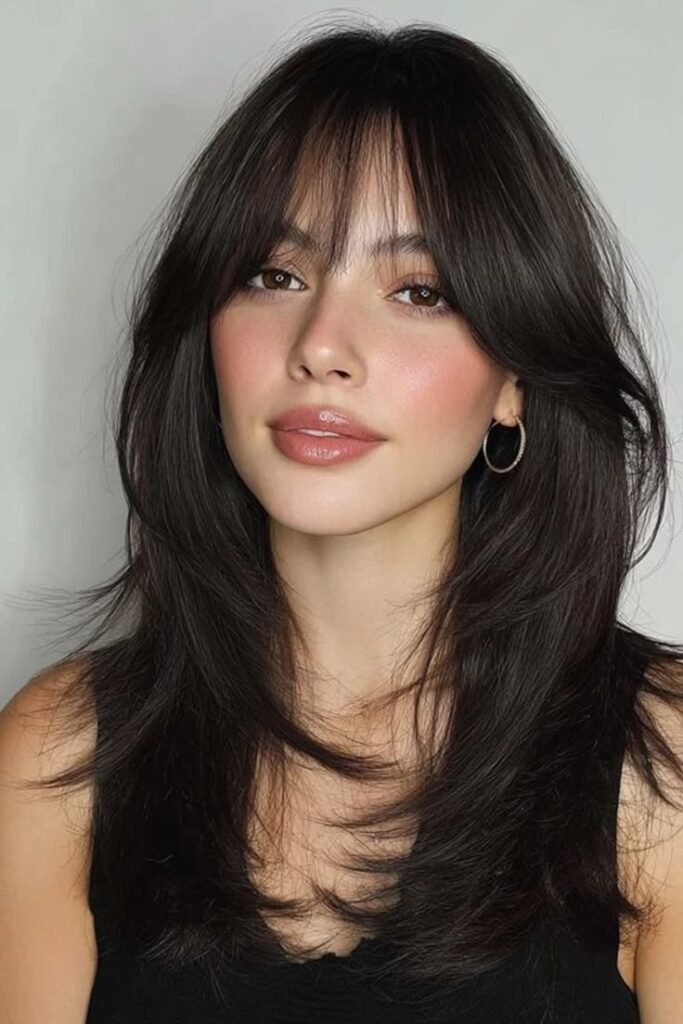
7. Medium-Length Hair With Wispy Bangs
Wispy bangs give medium-length hair a softer fringe without covering the entire forehead. The lightweight, separated strands create an airy appearance and pair particularly well with relaxed layers and slightly tousled styling.
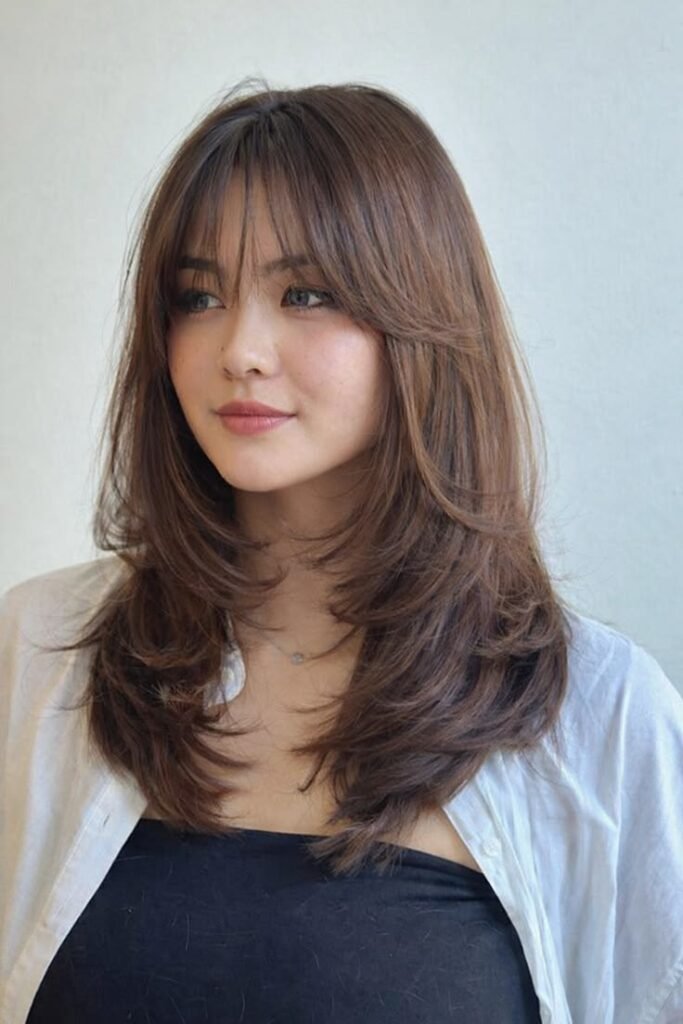
8. Medium-Length Hair With Side-Swept Bangs
Side-swept bangs create an asymmetrical frame across the forehead before blending into the rest of the cut. They’re a good option if you want a fringe but prefer something longer and easier to move away from the face.
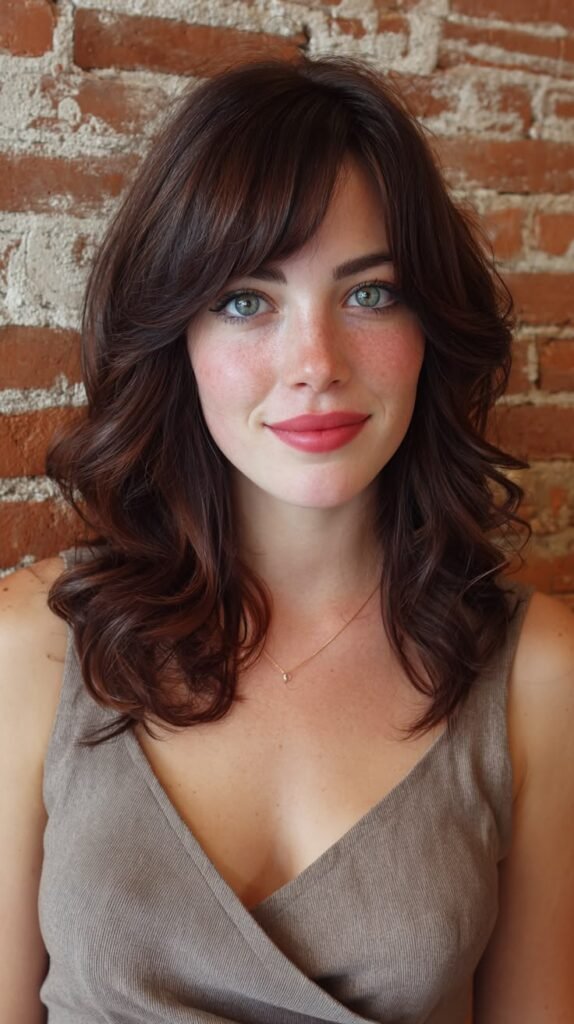
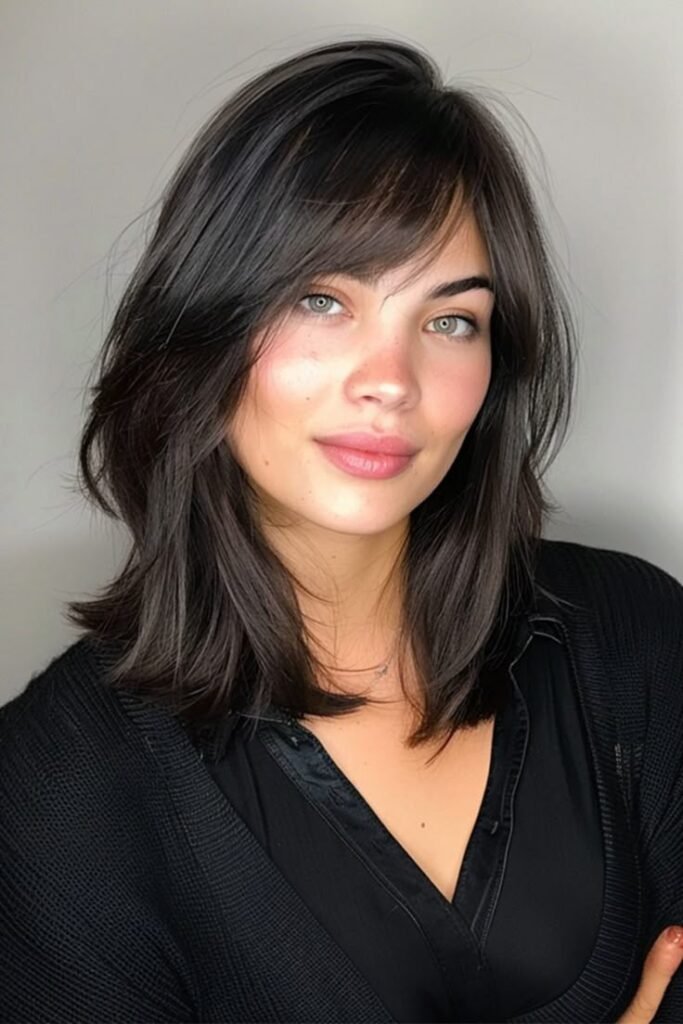
9. Medium-Length Hair With Blunt Bangs
A full blunt fringe creates a stronger contrast against soft or straight medium-length hair. The defined horizontal line makes the bangs the focal point of the cut, while keeping the remaining length relatively simple prevents the overall style from becoming too busy.
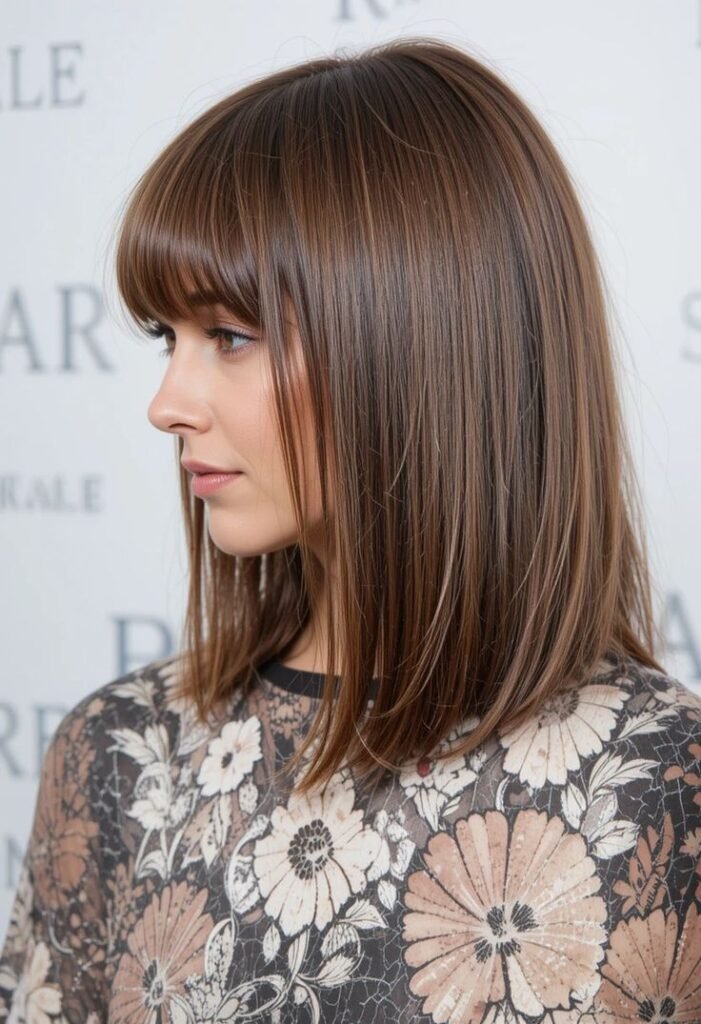
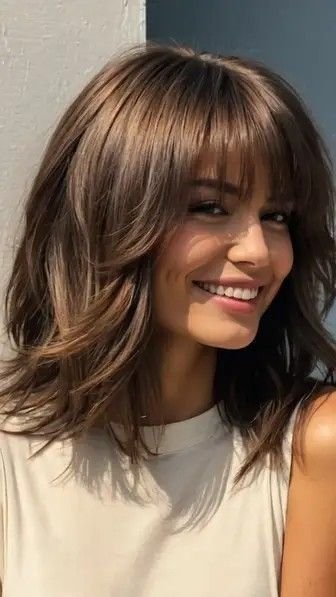
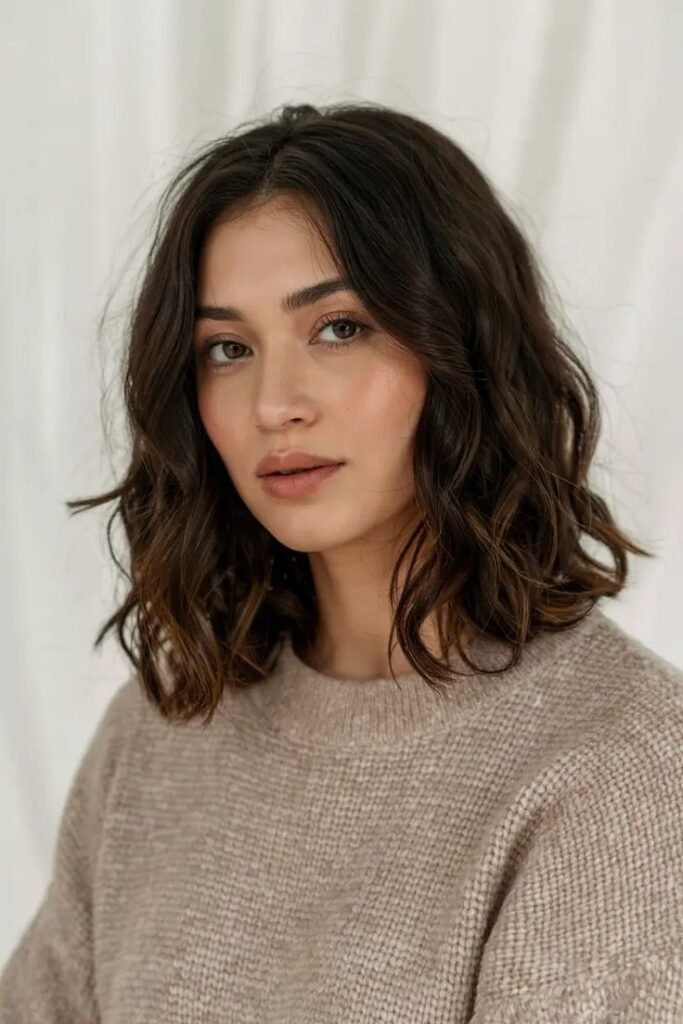
10. Textured Shoulder-Length Lob
A textured lob sits around the shoulders with subtle layering or point-cut ends that prevent the shape from looking too rigid. Loose bends and natural texture give it an effortless finish, making this a practical alternative to a perfectly styled blunt bob.
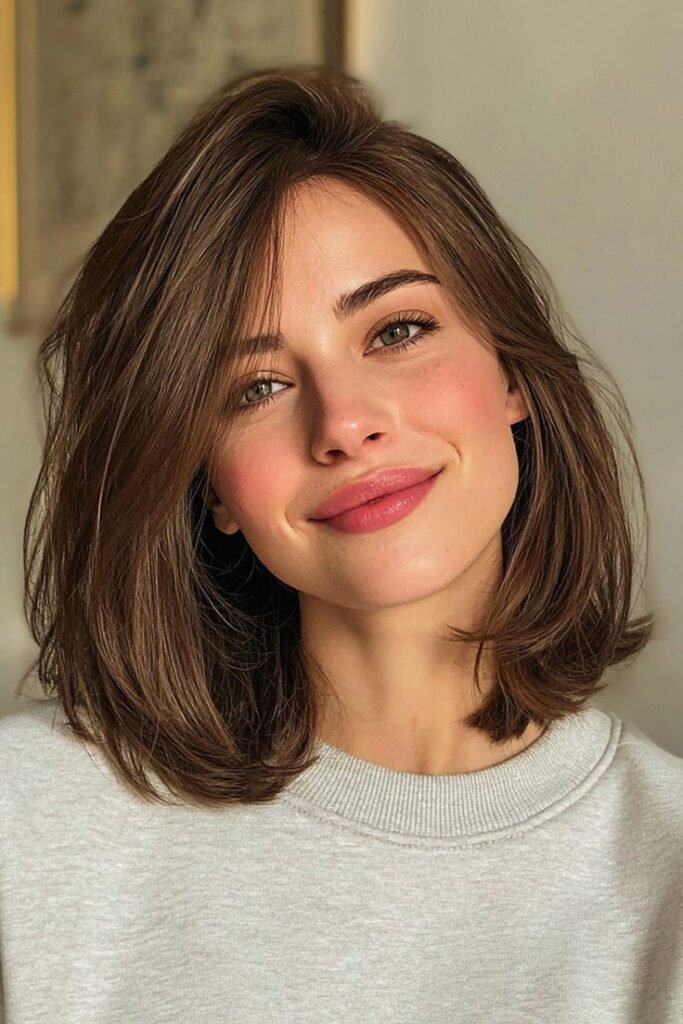
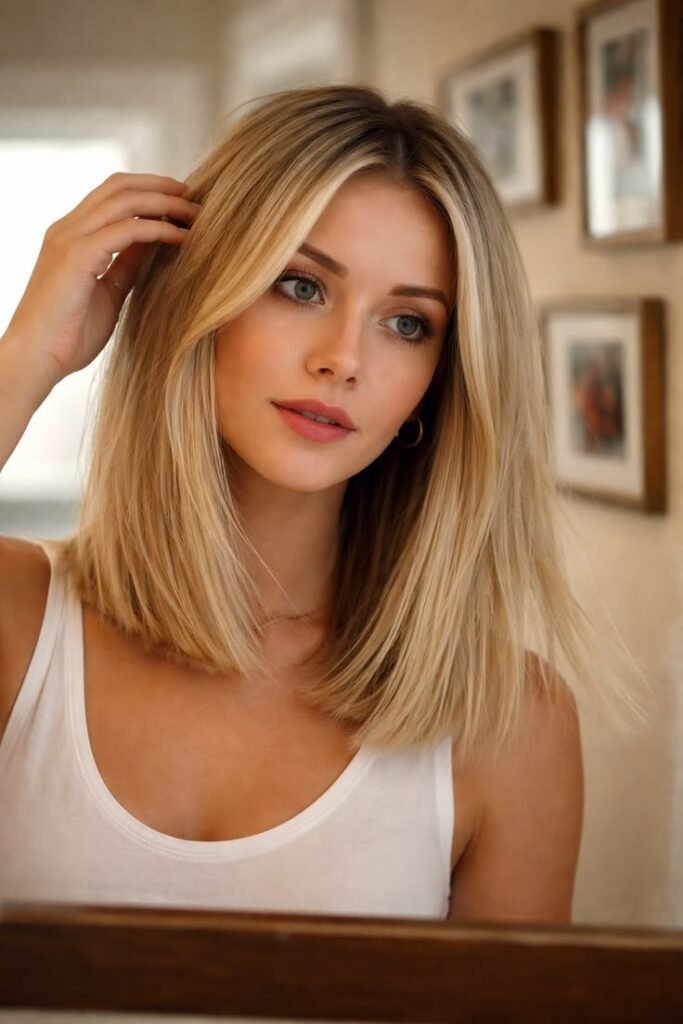
11. Blunt Medium-Length Lob
A blunt lob keeps the ends at almost one length, creating a clean and substantial baseline. The lack of heavy layering can make the ends appear fuller, which makes this cut particularly worth considering for straight or finer hair.
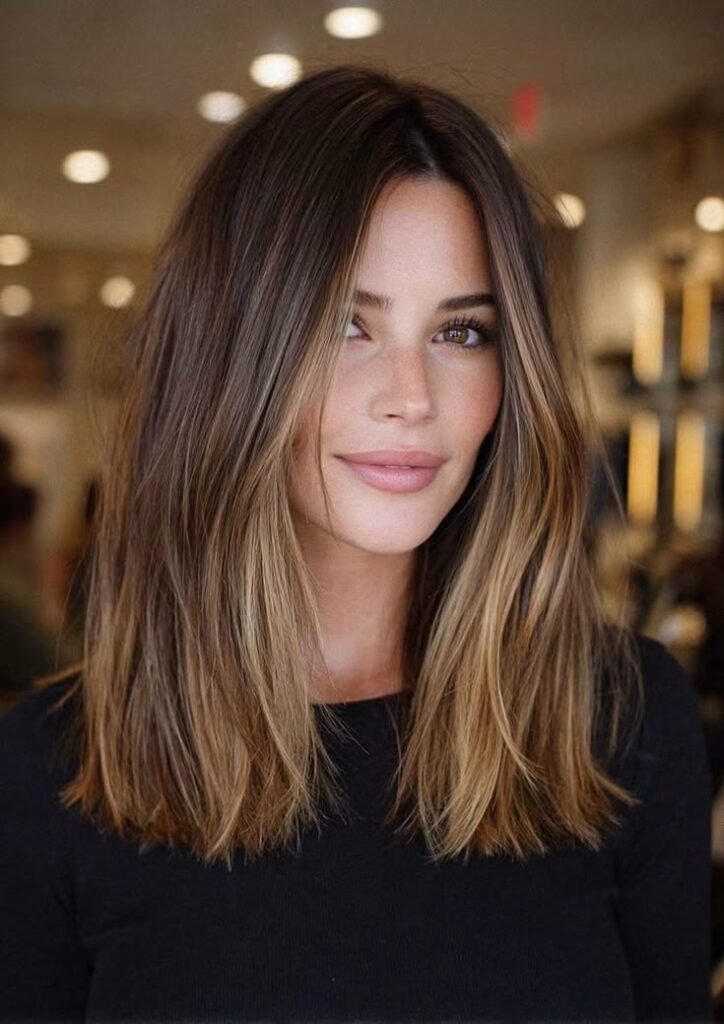
12. Layered Medium-Length Lob
Adding layers to a classic lob removes some weight and creates more movement through the mid-lengths and ends. It works especially well if a one-length lob feels too heavy or flat on your natural hair texture.
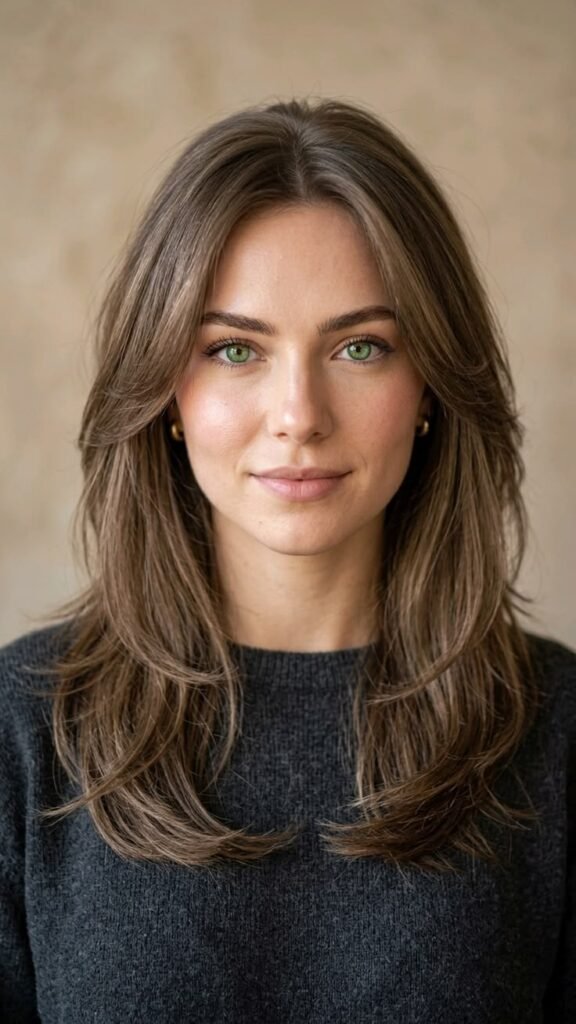
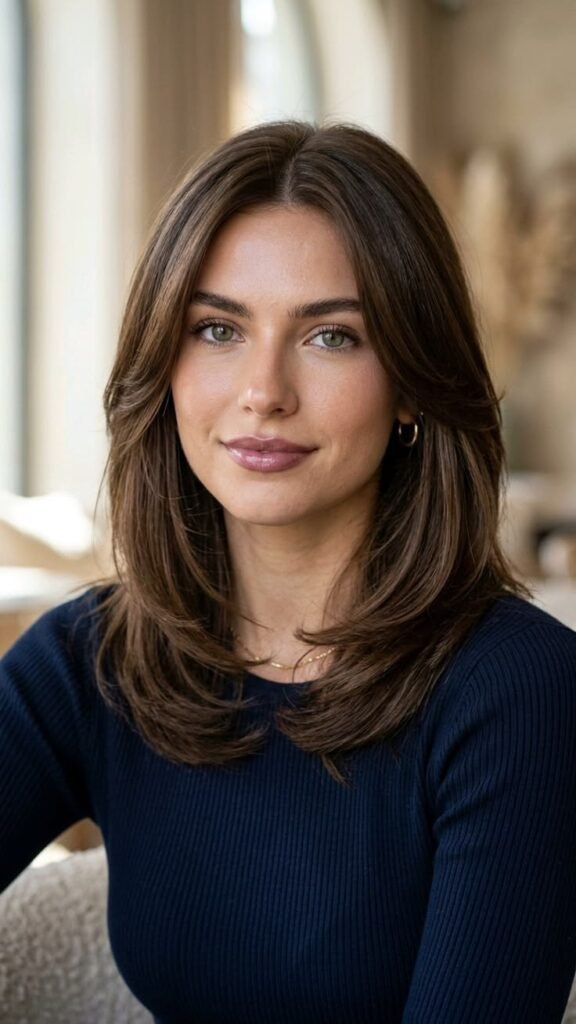
13. Medium-Length Shag
The medium shag combines plenty of layers with texture around the crown and face. Rather than looking perfectly polished, it’s designed to have movement and a slightly lived-in character. Wavy and naturally textured hair can work especially well with this shape.
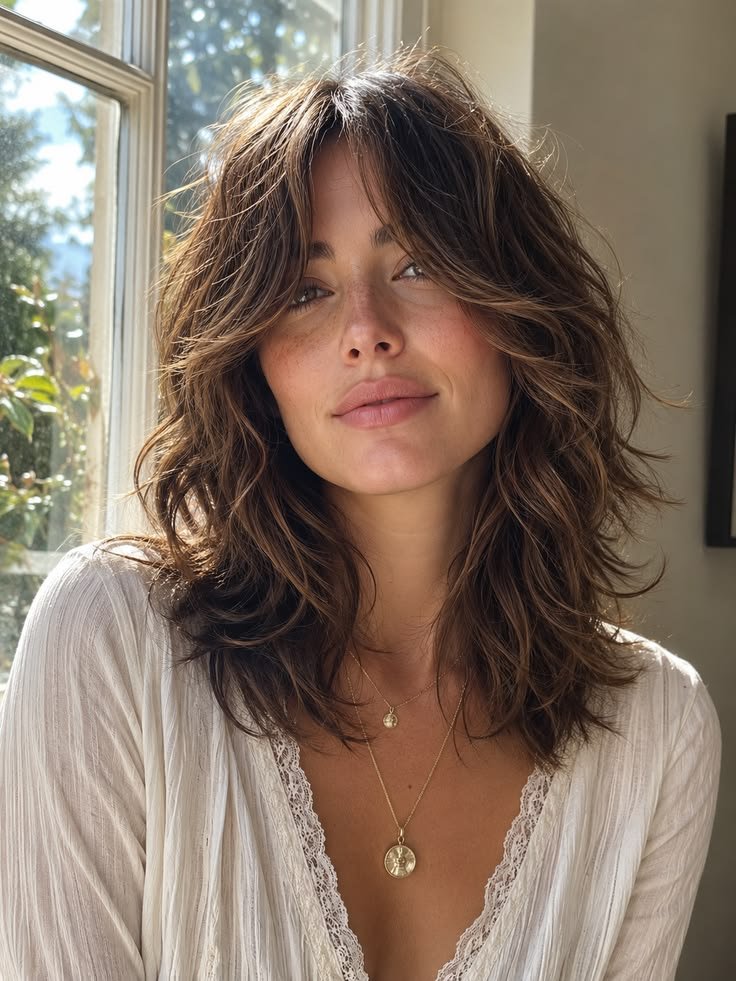
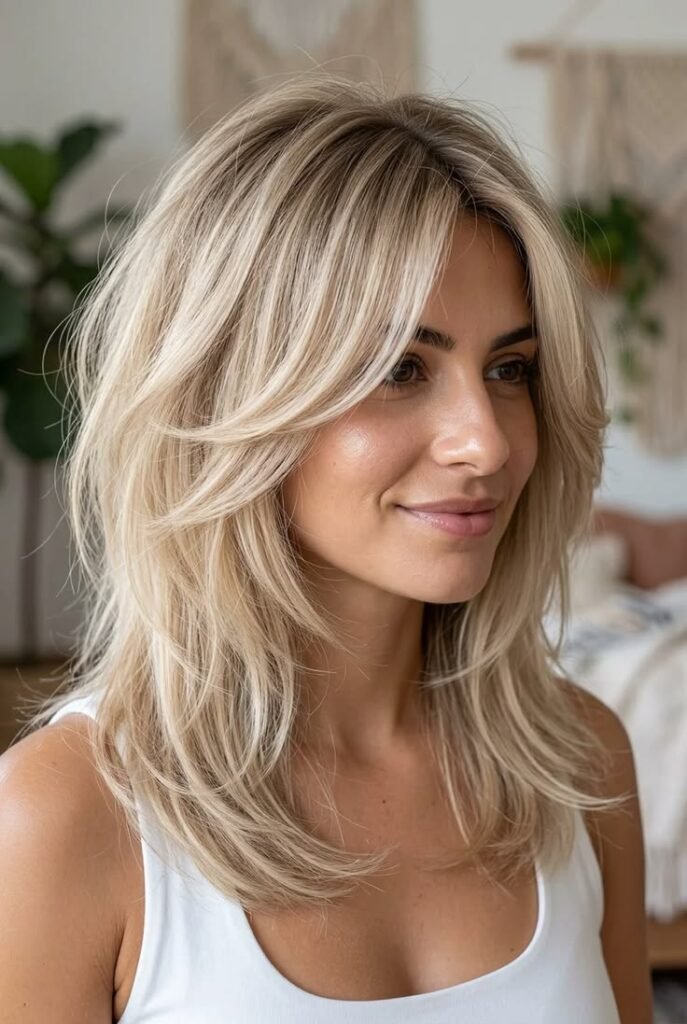
14. Medium-Length Wolf Cut
A wolf cut combines shorter, more pronounced layers around the crown with longer pieces toward the bottom. On medium hair, it creates a noticeable layered silhouette without requiring very long lengths to achieve the effect.
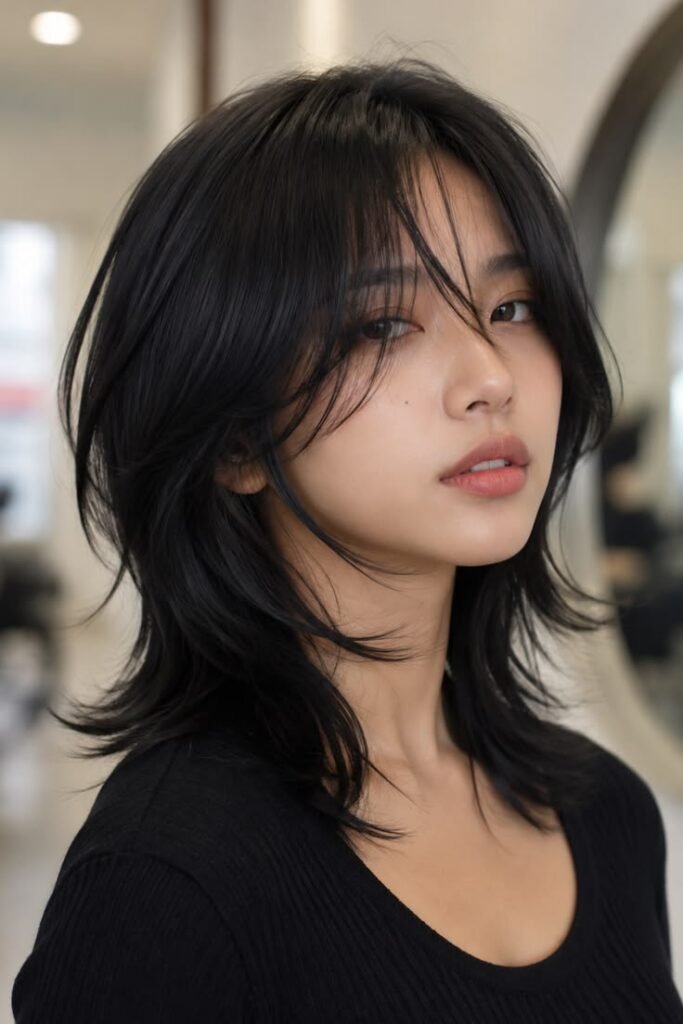
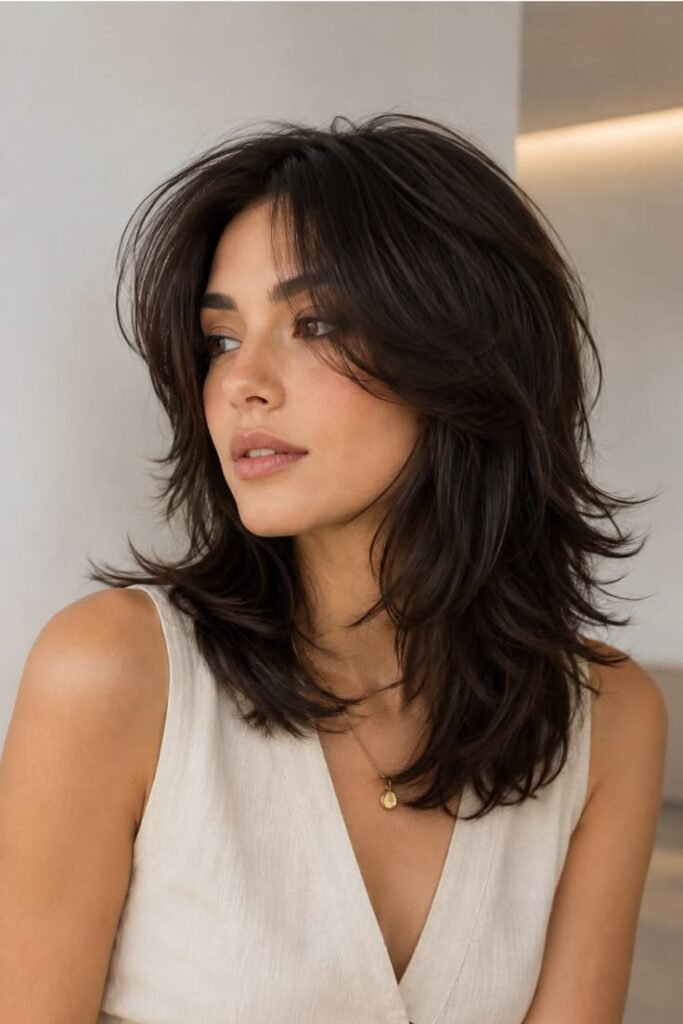
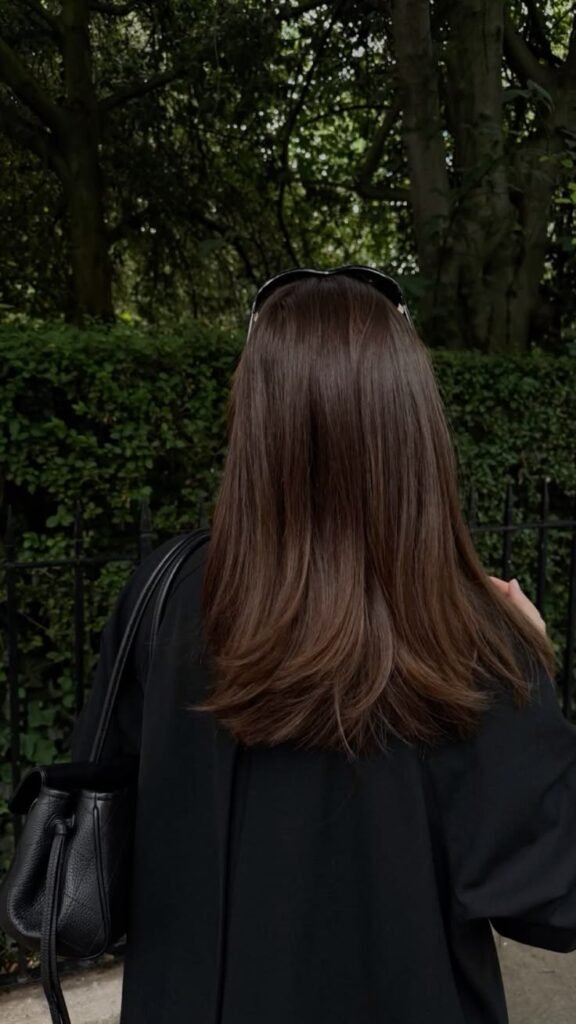
15. U-Shaped Medium-Length Haircut
Viewed from behind, a U-shaped haircut forms a gentle curve instead of a completely straight baseline. The centre remains slightly longer than the sides, giving medium-length hair a softer outline while preserving much of its overall fullness.
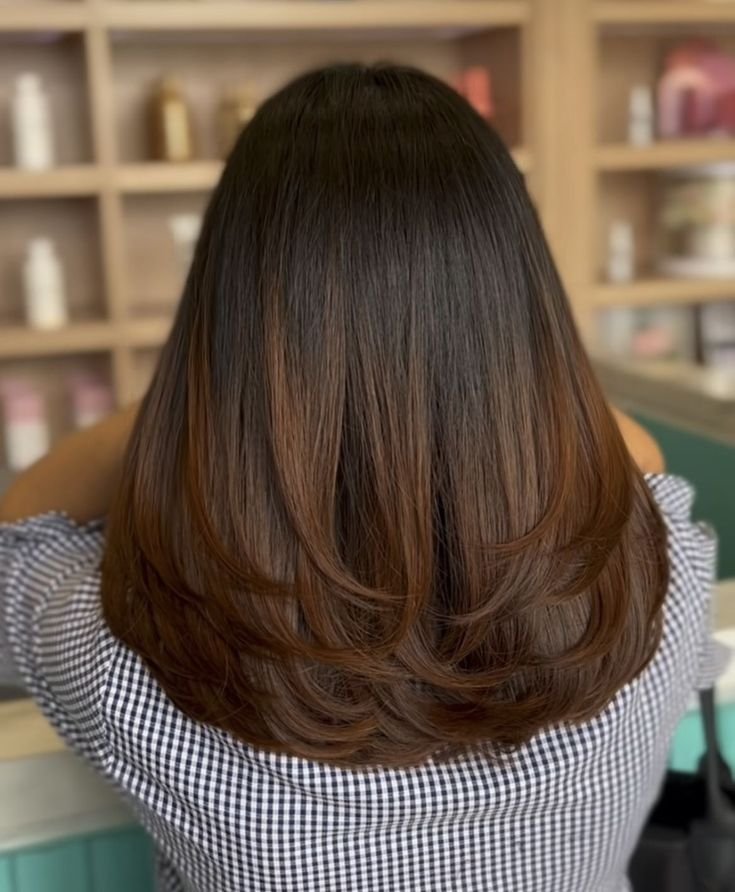
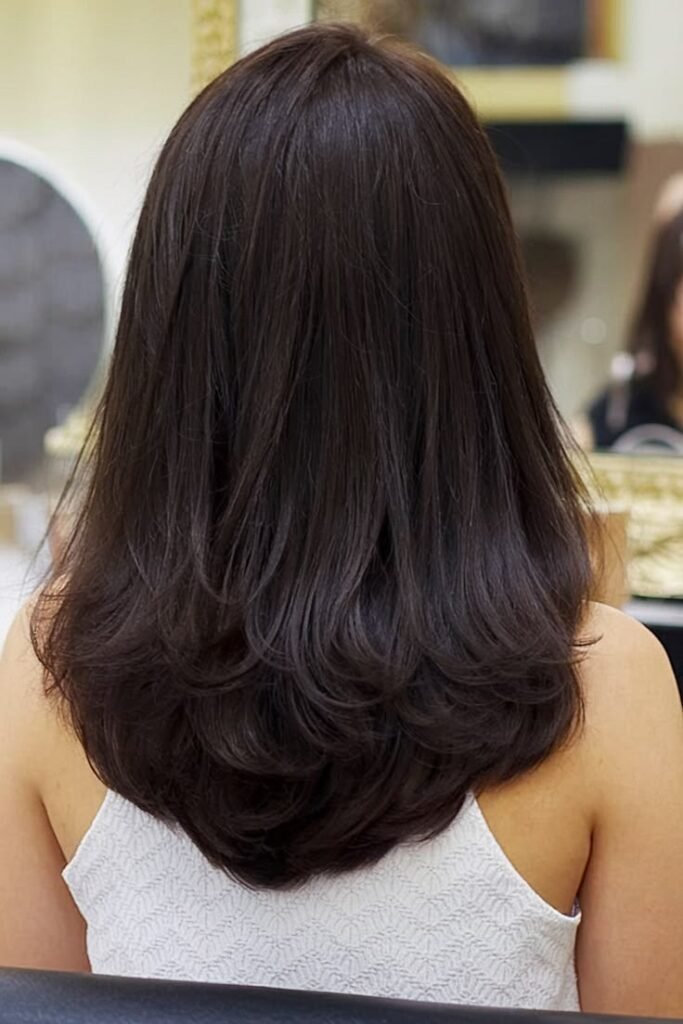
16. V-Shaped Medium-Length Haircut
A V-shaped cut creates a more defined point toward the centre of the back. It’s more dramatic than a U-shaped finish and can give layered medium hair a longer-looking silhouette while maintaining movement around the sides.
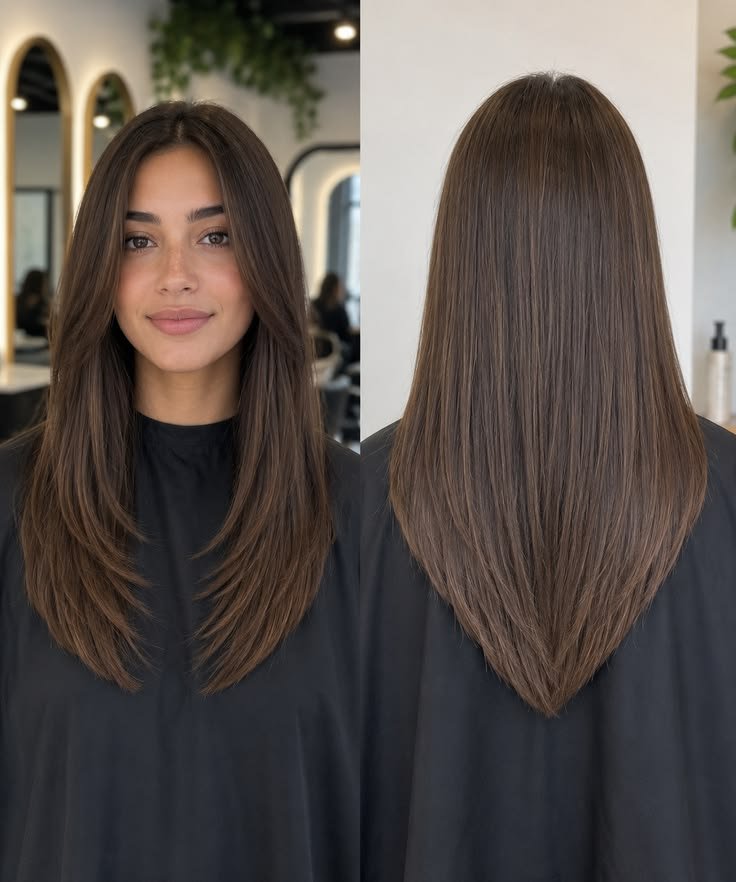
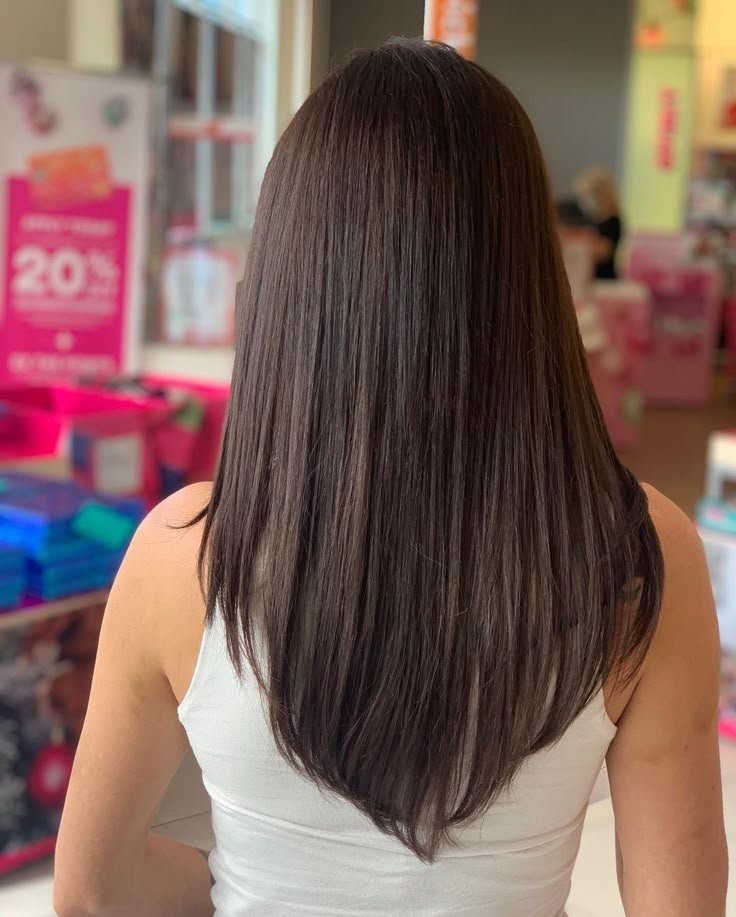
17. Medium-Length Wavy Hair
Natural or styled waves add movement and dimension to a medium-length cut without needing complicated detailing. Light layering can help waves form more freely, while leaving enough weight at the ends prevents the shape from becoming overly fluffy.
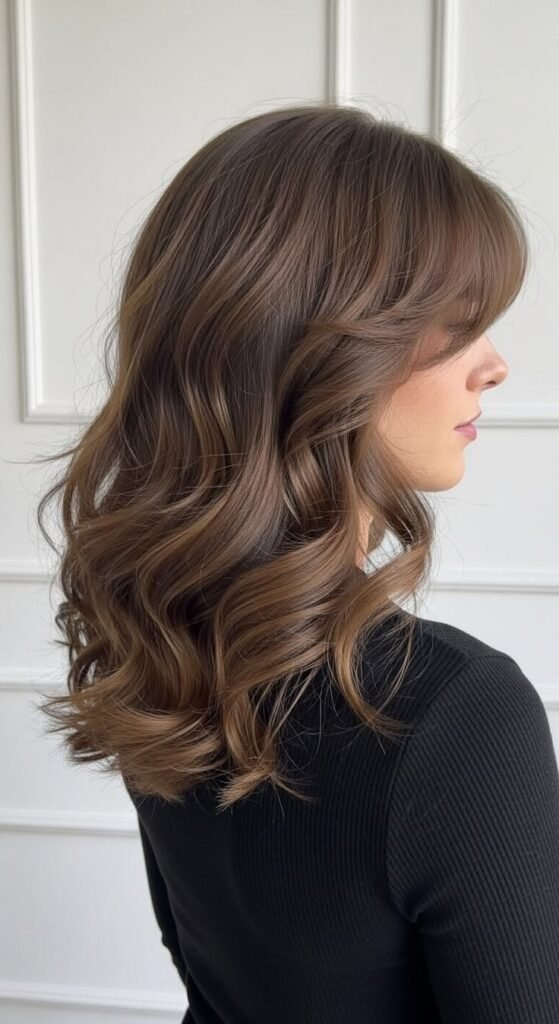
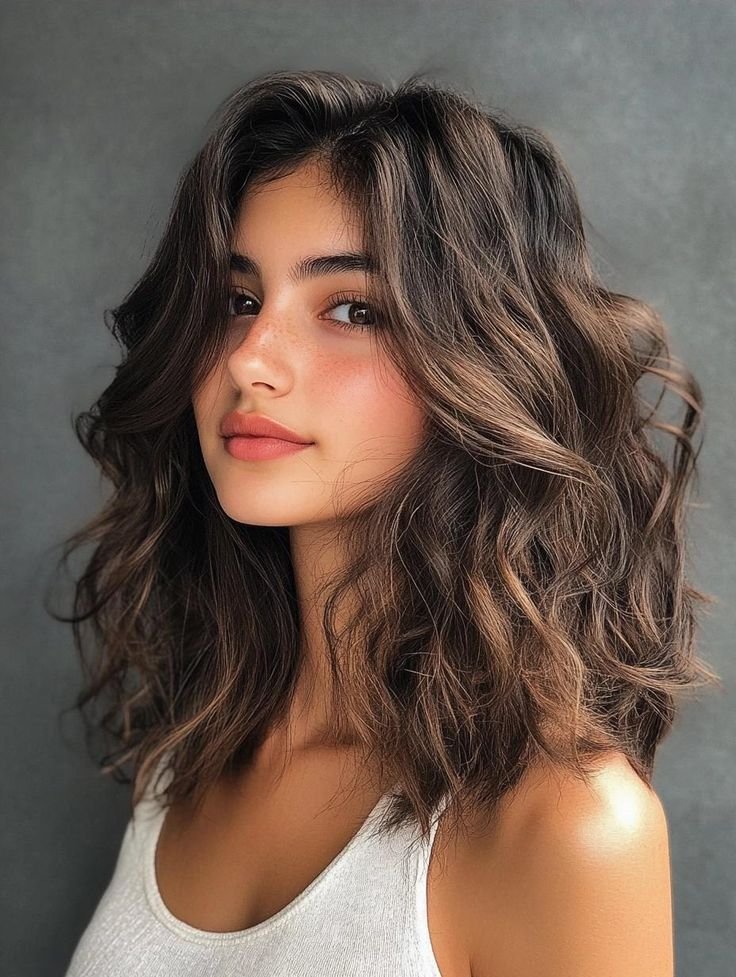
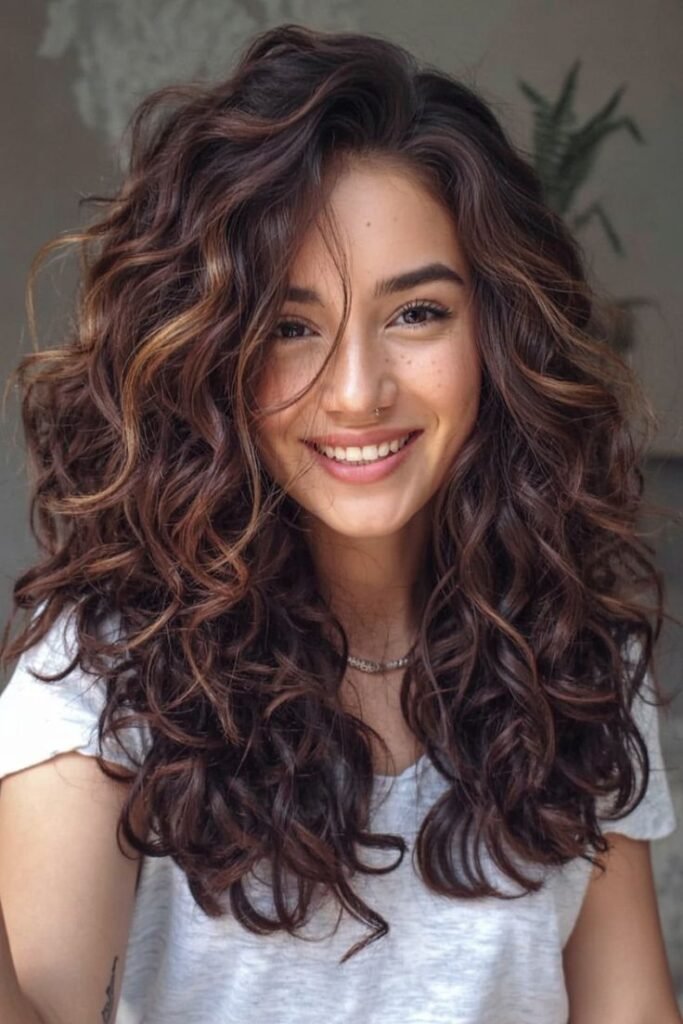
18. Medium-Length Curly Hair
Medium length gives curls enough room to develop their shape while remaining relatively manageable. Strategic layers can reduce excess bulk and help curls sit at different levels rather than forming a single triangular silhouette.
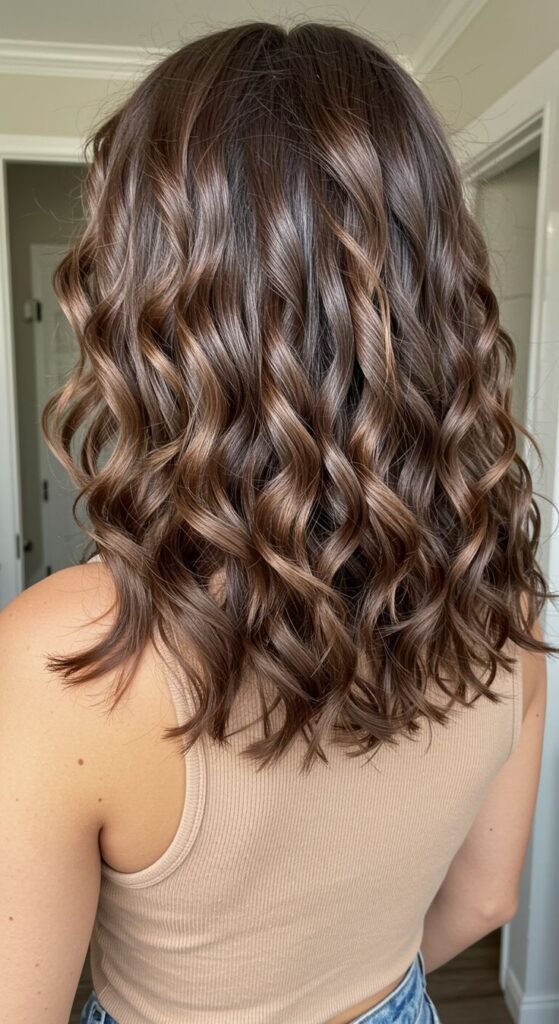
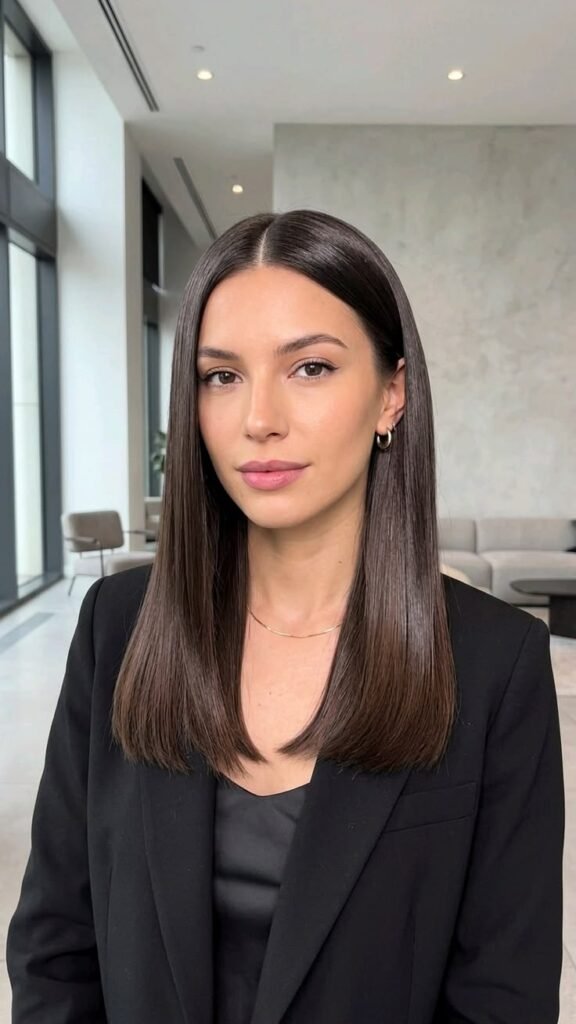
19. Straight Medium-Length Hair
Straight medium-length hair can look particularly striking with a clean baseline and subtle face-framing detail. A smooth finish emphasizes the precision of the cut, whether you choose soft layers or keep most of the length at one level.
How to Choose the Right Medium-Length Hairstyle
The best medium-length haircut depends on more than the style you like in a photo. Your natural texture, hair density, face shape and the amount of styling you’re comfortable doing all affect how a cut will look day to day.
For fine or thin hair, keeping more weight through the ends can help the hair appear fuller. Blunt lobs and lightly layered cuts are worth considering, while too many short layers can remove density.
For thick hair, longer layers can remove some bulk and give the hair more movement. Textured lobs, soft layers and medium shags can also help distribute volume throughout the cut.
If you have wavy or curly hair, consider how your natural texture changes when dry. A medium-length cut with thoughtfully placed layers can give waves and curls more room to form while preventing too much weight from collecting at the ends.
For straight hair, clean shapes such as blunt lobs can emphasize the precision of the cut, while face-framing or feathered layers can add movement if you prefer a softer finish.
How Much Maintenance Does Medium-Length Hair Need?
Medium-length hair can be relatively easy to maintain, but the haircut makes a big difference.
A simple lob or softly layered shoulder-length cut generally requires less daily styling than a heavily layered shag or a cut with bangs. Bangs also tend to need more frequent trimming to maintain their shape.
If low maintenance is your priority, ask your stylist for a cut that works with your natural texture and still looks good as it grows.
What to Ask Your Hairstylist
Instead of showing your stylist only one inspiration photo, save two or three examples that have a similar hair texture and density to yours.
Explain which parts you like—the length, layers, fringe, volume or shape—and how much time you normally spend styling your hair.
Your stylist can then adapt the inspiration to suit your actual hair rather than trying to reproduce a photograph exactly.
Frequently Asked Questions
Medium-length hair generally falls somewhere between the chin and shoulders, although collarbone-length hair is also commonly included in the category.
They can be. Layers can introduce movement, reduce weight and change the overall shape of medium-length hair. The amount and placement of layering should depend on your hair density, texture and desired result.
Cuts that preserve fullness through the perimeter, such as a blunt or lightly layered lob, can work well with fine hair. Excessive layering may make already-fine ends appear thinner.
It often can be because there’s less length to wash, dry and style. However, styles with bangs or highly structured layers may require more frequent trims and daily styling than a simple medium cut.
There isn’t one schedule that works for everyone. A structured bob or fringe may need refreshing sooner, while longer, softer layers can usually grow out more forgivingly. Your hair growth rate, condition and preferred shape will determine how often a trim makes sense.
Find Your Next Hairstyle
Still deciding? Explore more hairstyle inspiration based on your hair type and the look you’re considering.

1 Response
Comments are closed.